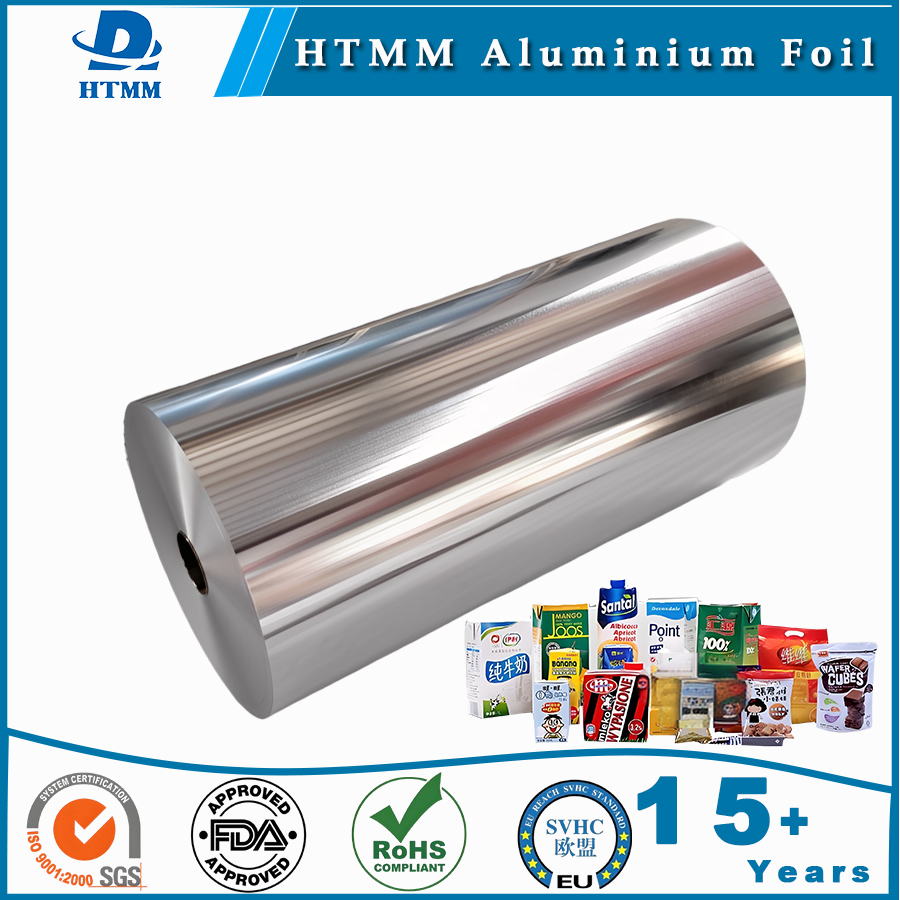
 When you open a pack of cigarettes and peel back the shiny silver cover, you may not realize that this layer of paper has gone through a quiet technological revolution. Its core—the aluminum foil layer—has been surprisingly thin 6 microns (0.006 mm) and up to 7 microns (0.007 mm). This small difference of 1 micron reflects intense competition between materials, processing and cost.
 What Does the Ultimate "Thinness" of 6 and 7 Microns Mean?
First, we need to gain a basic understanding of the 6 and 7 micron thicknesses. A micron is one thousandth of a millimeter. Human hair is about 70 microns in diameter. This means that the aluminum foil used in composite foil is only about one-tenth the diameter of a human hair.
For a more illustrative comparison, we previously discussed household aluminum foil, which is about 15 microns thick. The aluminum foil used in cigarette packaging is only half the thickness, or even less. If you held it on your fingertips, you wouldn't be able to feel its presence. It’s so thin that a breath can crease it, creating a hazy translucent effect in the sunlight.
So, why the need for such dilution? The key drivers are "reduction" and "cost reduction and efficiency improvement". While maintaining basic barrier properties, each micron-thin aluminum foil layer reduces the amount of aluminum used to produce a roll of composite foil. For fast-moving consumer products like cigarettes, which are worth billions, these savings in raw material costs are astronomical. Furthermore, thinner materials mean lighter end products, further reducing logistics costs.
Such delicate and brittle aluminum foil cannot exist on its own. Before it can be commercially produced, it must be combined with other materials through state-of-the-art technology to form composite foil rolls.
6/7 micron Lamination foil typically adopts a classic three-layer structure:
Outer layer (rib layer): paper. Provides mechanical strength and rigidity, facilitates printing and stable transport in high-speed packaging machines.
Middle layer (spirit layer): Aluminium Foil 6mic For Lamination 6 or 7 micron aluminum foil. This basic functional layer provides high barrier characteristics.
Inner layer (adhesive layer): heat insulating plastic film (e.g. CPP). This seals the package when it gets hot.
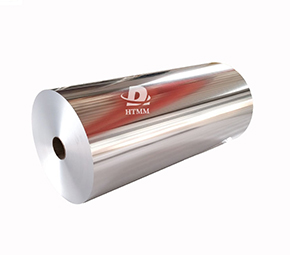
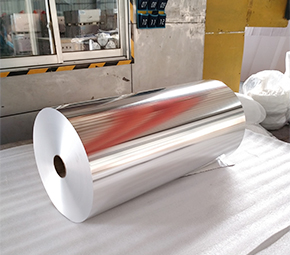
Jumbo Roll Dimensions:
Total thickness: Because the aluminum foil layer is thinner, the composite foil also has a lower overall thickness, which ranges from about 20 to 40 microns depending on the paper thickness used.
Width: For high speed slitting and packaging machines, the width of jumbo rolls typically ranges from 600mm to 1200mm.
Length: Each roll can range from several thousand to 10,000 meters, ensuring large-scale continuous production.
Because 6/7 micron aluminum foil is extremely prone to wrinkles and breakage, workshops producing large rolls of this composite foil require very high cleanliness, tension control and lamination precision. It's like a flawless suit of armor on a delicate princess.

The choice between 6 and 7 microns is not just a numerical choice; It is a tightrope walk between performance, cost and output.
7 Microns Alu Foil : the cost-effective choice. Aluminium Foil 6mic For Lamination 7 microns can be considered the "golden balance" of performance, cost and process stability under current technology. It is slightly stronger than Aluminium Foil 6mic For Lamination 6 microns, less susceptible to breakage and pinhole defects during manufacturing, slitting, and packaging, thus better ensuring smooth operation on high-speed production lines. For most cigarette brands, 7 micron aluminum foil provides more than adequate moisture-proof and flavor retention properties.
6 Micron Alu Foil : Symbol of state-of-the-art craftsmanship. 6 microns pushes the thinness to even more extremes, a testament to the technological prowess of the industry. It offers lower weight and cost per square metre, the ultimate goal of cost reduction. However, this 1 micron reduction poses immense challenges to the flexibility of the base aluminum material, the precision of the manufacturing equipment and the requirements for the workshop environment. Any slight fluctuation can reduce production. Therefore, manufacturers currently capable of stable, large-scale production of 6 micron composite foils are industry leaders.
Invisible Battlefield—Final Tests on High Speed Packaging Lines
No matter how precisely a Large Roll of Aluminium Foil is produced, the ultimate test is in high-speed cigarette packaging machines capable of producing 500-800 packs per minute. Here, Aluminium Foil 6mic For Lamination 6- and 7-micron aluminium foil composite foils meet their most demanding challenges.
Given that thicknesses as thin as 6 microns Aluminium Foil can bring such significant benefits, a natural question is: can it get even thinner in the future? Like 5 microns or 4 microns? This shows two future directions in the development of composite materials: exploring frontiers and increasing functionality.
Currently, the physical properties of Pure Aluminum Foil have reached a limit. When the thickness drops below 6 microns, it becomes virtually impossible to control during production and is extremely prone to breakage. Moreover, it develops more "pinholes"—microscopic holes that act like sieves, significantly compromising barrier properties and making gains outweigh gains. Therefore, the pure aluminum foil approach may be approaching its physical limits.