.jpg)
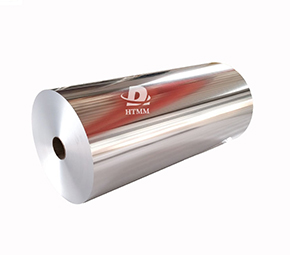
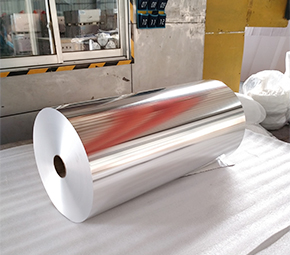
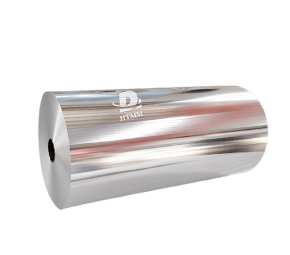
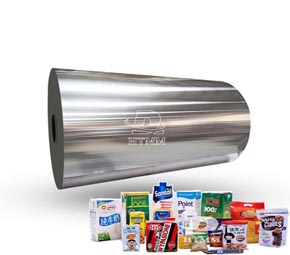
Have you ever wondered what that shiny roll of aluminum foil in your kitchen looked like before it was cut to size? Essentially, it was a giant, heavy "jumbo roll"—known in the industry as a master roll or giant coil. These objects can weigh anywhere from a few hundred kilograms to a full ton and can be over a meter wide; Incredibly heavy to handle. They are produced by manufacturers who specialize in supplying these master rolls to downstream facilities, such as food packaging plants and lamination factories. These jumbo rolls don’t go straight to retail shelves for consumers; Instead they are taken to processing plants where they are sliced into small rolls or laminated with plastic film and paper, eventually becoming familiar packaging for things like potato chip bags, powdered milk caps, and coffee packs. When flexible packaging manufacturers purchase large rolls of aluminum foil, their primary concern is barrier performance. Aluminum foil is inherently impervious to light, air, and moisture—three key characteristics that make it a prime material for food preservation. Consequently, the manufacturers of these large rolls are very particular in their choice of alloy grades. For example, the 8011 alloy provides excellent hardness and rigidity, making it a common choice for yogurt cup lids or packaging that requires puncture resistance. Known for its high purity and high flexibility, the 1235 blend is ideal for lightweight packaging for chocolates and confectionery. Then there is the 8079 blend, which boasts good potency and is widely used in pharmaceutical blister packaging. Manufacturers recommend specific mixes and thicknesses based on the end product the client wants to produce; This process effectively marks the beginning of the customized service.
Throughout the industry, competition has shifted from price wars to service competition. An increasing number of manufacturers offer free samples with highly flexible specifications: cutting widths range from 200mm to 1,400mm, thicknesses vary from 7 to 50 microns, and core inner diameters are available in both 76mm and 152mm sizes. Major manufacturers also offer product certifications—such as compliance with FDA food-contact standards and ISO quality system accreditation. Ultimately, the manufacturers of these large aluminum foil rolls are selling more than just metal film; They have provided comprehensive solutions that cover everything from material selection and prototyping to mass supply. The next time you tear open a snack package, that crisp wrapper could be the result of a free sample provided by one of these manufacturers.
There is a real art to evaluating free samples for downstream flexible packaging manufacturers. Experienced technicians will first hold the sample up to the light and check for pinholes; A quick glance reveals the number and distribution of these small holes. Too many pinholes compromise the oxygen and moisture barrier properties of the material, resulting in shorter food shelf life. Next, they assess surface feel; High quality aluminum foil should be smooth and flat, free of wrinkles, indentations or oil stains. A simple heat-chill test is followed to test the bond strength when laminated with other materials. More precise assessors use instruments to measure surface wet tension; If this value is too low, printed designs tend to be blurred or fuzzy. Manufacturers confident in their products will typically actively share testing methods and standards instead of being vague. So, when you receive a free sample, don’t just look at its shine—inspect it thoroughly to determine its true quality.
Honestly, there are pitfalls to watch out for in this industry. Some manufacturers offer excellent free samples but noticeably lower quality bulk orders—with uneven thicknesses or occasional oil spots. Such discrepancies between samples and actual invoices were unheard of. How can these problems be avoided? First, clearly specify technical parameters in the contract—such as thickness tolerances and maximum number of pinholes per square meter—so that there is a concrete reference point. Second, for large orders, it is best to visit the factory to verify the stability of the production line and the stringency of quality control. Third, place a small trial order to check quality before scaling up. Another common mistake is focusing solely on price and choosing the cheapest option. In reality, the cost of aluminum foil rolls depends on factors such as the purity of the alloy, the precision of the rolling and the annealing process; Lower prices mean that costs can be cut in this area, resulting in higher scrap rates for the finished packaging bags—which ultimately results in a net loss. A good manufacturer is willing to give free samples and submit to repeated testing; This kind of partnership gives you peace of mind.