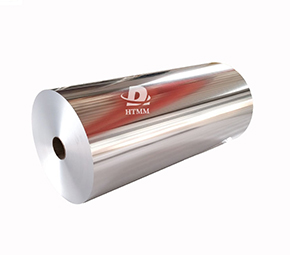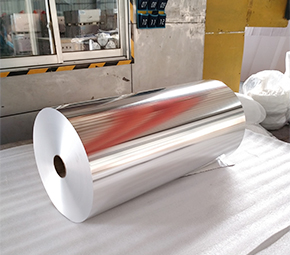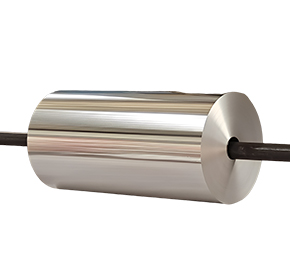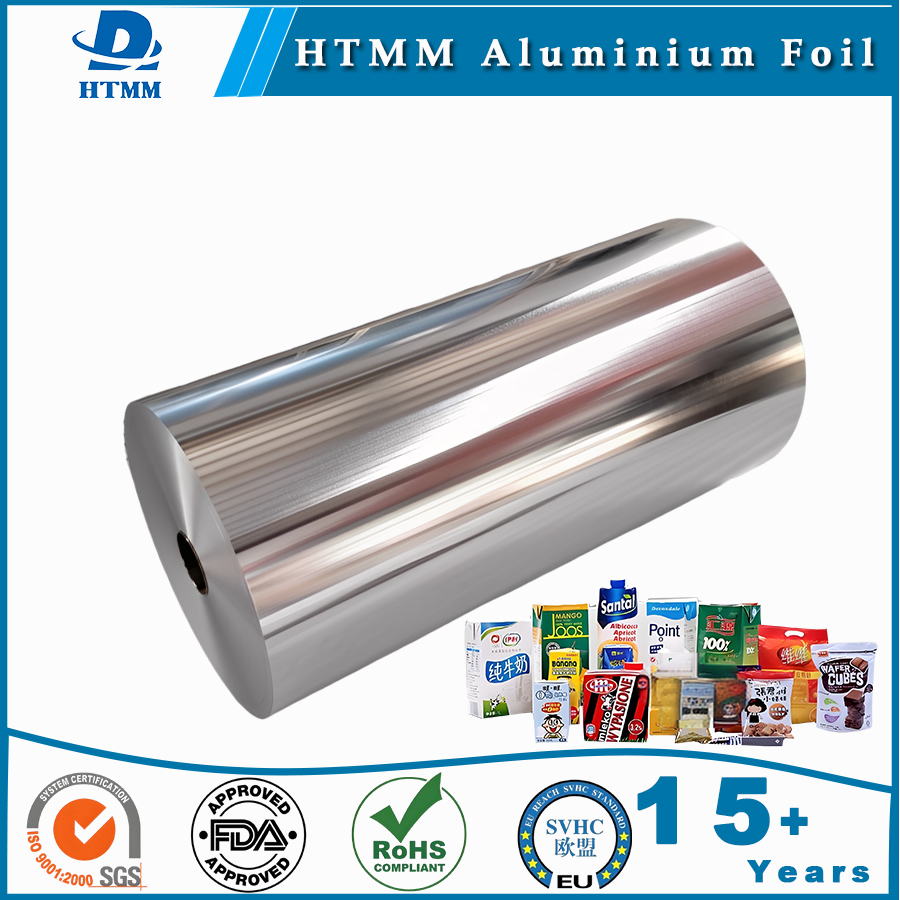
In the packaging industry, Aluminum Foil as a high barrier material, the choice of its thickness directly affects the performance and application range of the product. The thickness of aluminum foil ranges from general Household aluminum foil to precision industrial composite packaging, usually from 0.006mm (6 microns) to 0.2mm (200 microns). Among them, 7 micrometers is an extremely thin standard, which is called "double zero foil" (aluminum foil with a thickness of less than 0.01mm) in the industry. Among the many thicknesses, 7 micrometers aluminum foil makes it a golden choice in the field of lamination because it balances between softness enough and good barrier properties.
However, 7 micron aluminum foil is extremely thin, which presents technical challenges to the manufacturing process. To grow hard aluminum to a thickness one-tenth the diameter of a human hair (about 70 microns) and achieve stable performance, it required not only high-precision rolling equipment, but also precise process control by experienced technicians. Even the smallest fluctuations can lead to failure or quality defects in aluminum foil.
The core of the difficulty in the production of 7 micrometer aluminum foil is pinhole control and surface quality control. A pinhole is a small hole through which aluminum foil is inserted. It is an important indicator of the quality of thin aluminum foil. In the current processing technology, 7-9 micrometers of aluminum foil cannot completely avoid the pinhole, but it seems that it can be kept to a very low range. According to the national standard GB/T3198-2003, aluminum foil thickness between 6.5-8 micrometers, under the a-level standard, the number of needle holes per square meter should be controlled within 200 pieces. However, for high-end applications, the internal control standard of many large enterprises is much stricter than the national standard, such as the requirement that the number of needle holes is less than 100 / square meter, and all dark room conditions to inspect, leak There will be no guarantee. The pinhole diameter is also strictly limited to 20 microns or less, so as not to affect the overall blocking performance. Not only the hole in the needle, but also the cleanliness of the surface is important. There should be no oil stains, dust, or oxidative spots on the surface of aluminum foil. High surface tension (usually requires more than 72mn /m) must be achieved. It ensures robustness with materials such as PE, paper and prevents packaging from being layered during use.
Although it is difficult to make, 7 micrometers of aluminum foil has irreplaceable performance, so it is widely used in the field of composite packaging. It is generally combined with materials such as PET, PE, and paper.
Food packaging: utilize sealed packaging of candy, chocolate, milk powder, seasonings, coffee, etc., to extend its excellent shading, moisture and fragrance retention performance.
Chemical packaging: as a barrier for cold pressed aluminum (SP composite film) to protect tablets and capsules from moisture, oxygen and light.
Industrial and consumer products: used for packaging chemical products and daily necessities such as soaps that require high precision.
As a professional production factory, we know that 8079 and 1235 alloy 7 micrometer aluminum foil 1 micrometer is related to your product quality. Therefore, in quality management, we have established a complete process management system that is strictly in accordance with national standards. High-purity aluminum fabric is carefully selected from the incoming raw materials to reduce needle holes caused by impurities. During the production process, we rely on high-precision automatic rolling machines and intelligent quality control systems to perform real-time closed-loop control of thickness tolerances and plate shape to ensure thickness uniformity. For the most important needle-hole problem, we produce in the clean factory and use the needle-hole inspection table in the all-dark room to ensure that the number of needle-holes per square meter is much better than the grade A standard Yes. At the same time, we carry out strict cleanliness tests on the surface of aluminum foil to ensure the robustness of the compound. By establishing a quality tracking mechanism for the entire "rolling - cold rolling - division" process, we have a traceable production file for each 7 micrometer aluminum foil roll to ensure the stability and reliability of the products we deliver to our customers. .
By continuing to invest in the precision of such equipment and by adhering to our craftsmanship, we are able to provide the global packaging industry with excellent performance and stable quality aluminum foil substrates at thickness limits of 7 micrometers.