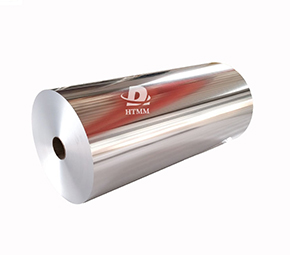
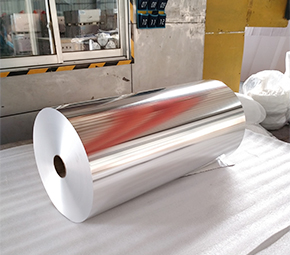
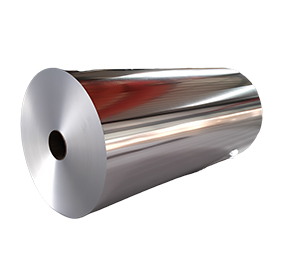
Of course, working with such thin aluminum foil has its own set of challenges. The manufacturing process is technically demanding and the yield rate is lower compared to thicker foils. Second, during the lamination process, the control of temperature and application of adhesive must be carefully performed to avoid wrinkling or delamination. However, 6.5 micron Alloy 1235 aluminum foil remains a mature and reliable alternative in the flexible packaging and lamination industry overall. You’ll most likely find this material in many of the everyday objects you come in contact with – such as milk cartons, potato chip bags, blister packs for pharmaceuticals, and flexible juice pouches.
.jpg)
Aluminium foil 1235 Why the packaging industry cannot do without mixing
1, it boasts high purity and ensures security and peace of mind. The 1235 alloy contains more than 99.35% aluminum, and its impurity levels are strictly controlled, preventing it from reacting with food products. Whether it’s used to wrap chocolate, butter or baby food, there’s absolutely no need to worry about off-flavors or toxicity. Many major chocolate brands—such as Ferrero Rocher and Godiva—rely on 1235 aluminum foil for packaging.
2. it is exceptionally soft and flexible. 1235 aluminum foil has an expansion rate of more than 15%; This means you can fold or curl it to your liking without cracking or tearing.
Previously, aluminum foil used in the flexible packaging industry was primarily 7 or 9 microns thick; However, the industry is now increasingly transitioning towards 6.5 micron foils. Why is this happening? There are three primary reasons for this.
The first reason is cost savings. At 6.5 microns the foil is about 7% thinner than the 7 micron standard. While this figure may seem insignificant at first glance, aluminum foil is sold by weight. Consider this: a roll of aluminum foil can be hundreds of thousands of meters long and cost hundreds—or even thousands—of tons of foil per year in a large-scale manufacturing facility. When dealing with such large quantities, even a slight reduction in thickness results in considerable financial savings. Given that the packaging industry generally operates on thin profit margins, every penny saved counts.
The second reason is that performance remains uncompromised. Many worry that reducing the thickness of the foil may compromise its barrier properties. This is not the case in reality. If the pinhole formation is effectively controlled, the barrier performance of the 6.5 micron foil is virtually indistinguishable from that of the 7 micron foil. Its water vapor transmission rate can be maintained below 0.01 grams per square meter per day, and its oxygen transmission rate below 0.1 cubic centimeter—a standard that fully meets the stringent requirements of both food and pharmaceutical packaging.
A third reason is the increased softness and conformity. The thinner the aluminum foil, the softer it is; thus, 6.5-micron foil is considerably softer than 7-micron foil. The soft foil will not likely break during processing on a high speed packaging machine. Also, it adheres more closely when laminated with a plastic film, and wrinkles less. These characteristics are crucial for the overall stability and efficiency of the production line.
Of course, not every manufacturer can make 6.5 micron aluminum foil. This requires more sophisticated rolling techniques, it is more difficult to control pinhole rates and generally lower production rates are achieved than for thicker foils. Any plant that is able to successfully produce 6.5 micron foil must certainly have a strong technical base.
Key Considerations During the Lamination Process- Aluminum Foil
Another critical factor is the drying temperature. Because aluminum foil is very thin—usually only 6.5 microns—it is very sensitive to heat. Higher temperatures can cause the foil to become brittle or even shatter; Conversely, if the temperature is too low, the glue will not dry properly. Typically, the heating process is divided into three stages—from about 60–70°C to 80–90°C and finally to about 100°C—to gradually increase the temperature so that the solvents within the adhesive can be completely evaporated.
After lamination, the material undergoes a "curing" process. To do this, the laminated material is placed in a drying chamber maintained at 40–50°C and allowed to rest for two to three days, giving the adhesive sufficient time to fully react and harden. If the curing is inadequate, the resulting packaging bags can delaminate—the aluminum foil separating from the plastic film—when simply tearing off by hand; This forms serious quality defects. Consequently, packaging manufacturers pay particular attention to this critical phase of production.