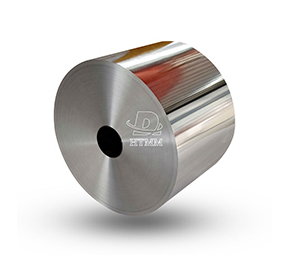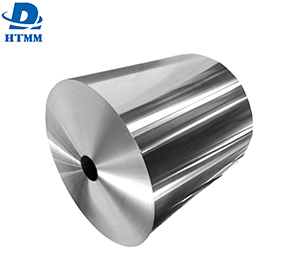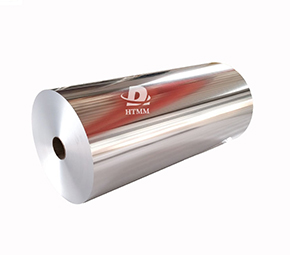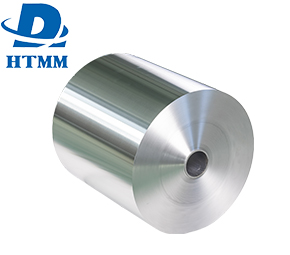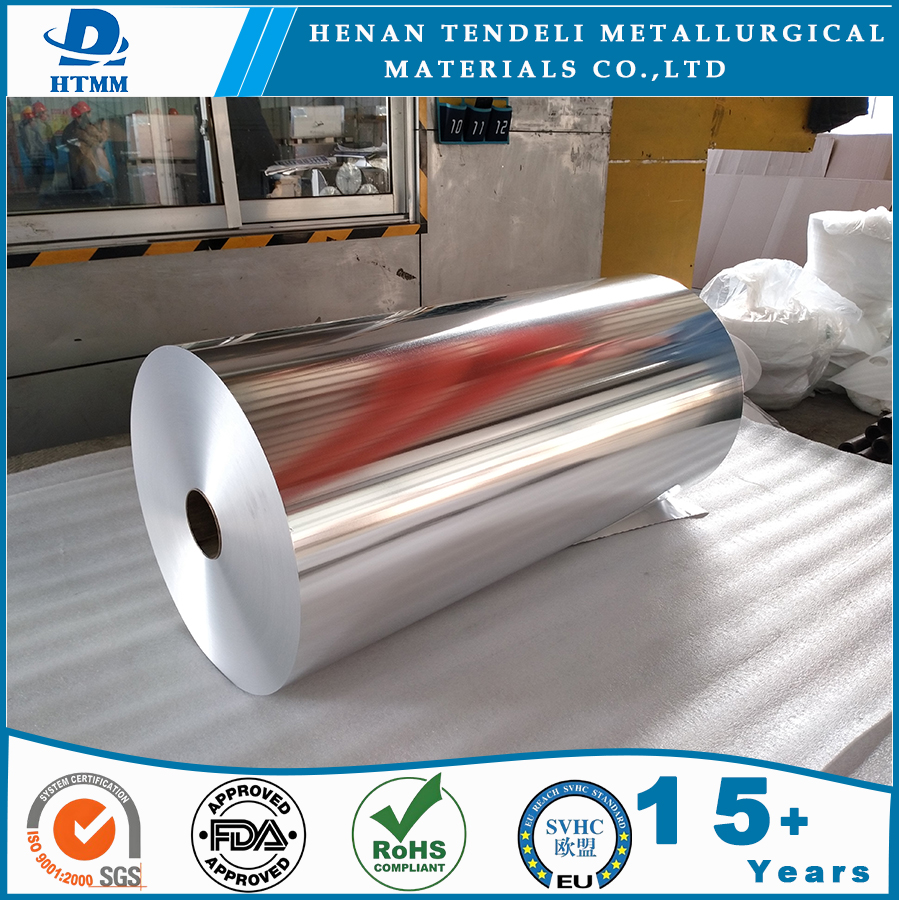
If you enter the kitchen accessories corner of a supermarket, you will definitely see a silver "tin paper" roll. The interesting thing is that this is called “tin paper” but it doesn't actually contain any tin—the “tin paper” we use at home today is 99% aluminum foil paper, and it's a much wider industrial-grade Aluminum Foil Roll. You may not have heard of it before, but there is a number that quietly protects the safety of the table every day: 8011
What does 8011 mean? Why did it become the first choice for food packaging?
8011 is a brand of aluminum alloy, which can be understood as the "identified number" of aluminum foil. Unlike pure aluminum foil (e.g. 1100 or 1235, which are commonly found in the home), the 8011 achieves an optimally balanced alloy combination by precisely adding a small amount of iron and silicon to the aluminum. As such, the tensile strength of the 8011 aluminum foil is about 40% higher than that of conventional pure aluminum foil, making it stronger and more durable, and the packaging is not easily damaged during transportation and storage.
You may ask: Does stronger power sacrifice softness? Due to its characteristics of "strength and softness", it is an ideal material for flexible food packaging. From the tear-proof yogurt cup cover film to the sealed aluminum foil of the take-out lunch box to the barrier in the center of the food composite bag, the 8011 aluminum foil plays an important role in a variety of situations.
How does food-grade aluminum foil ensure the safety of the entrance?
The term 'food grade' is very important to consumers. Many people are concerned about whether aluminum foil will release harmful substances—in fact, common 8011 food grade aluminum foil has very strict safety management regulations.
Food-grade aluminum foil is made of raw materials and extruded aluminum alloys. During the production process, it must be annealed and sterilized at high temperature. According to the national standard GB 4806.9-2023, there are clear limits on the amount of moving elements of metal materials for contact with food. And products that meet this standard can only be used when in direct contact with food.
What is more certain is that the surface of aluminum foil 8011 naturally forms a dense oxide film. This can be summed up in six words: non-toxic, unsame, and harmless.
The "miracle freshness" of aluminum foil: Why can freshness be fixed?
When you put the leftover food wrapped in aluminum foil in the refrigerator, did you notice that the moisture and taste were particularly good when you took it out the next day? This is not a coincidence, but the "natural ability" of aluminum foil.
The aluminum foil 8011 has almost perfect blocking performance, so the transmission of oxygen, moisture, light and odor is almost “zero”. When used in food packaging, it is equivalent to attaching a vacuum "A" to the food, and the food does not oxidize or deteriorate because the external oxygen does not flow in. Food does not dry because internal moisture is not released. The light is completely blocked so that photosensitive nutrients are not decomposed or destroyed. At the same time, the smell cannot contaminate the food and the aroma of the food is not emitted.
Experimental data also confirms this: the shelf life of food packaged in aluminum foil can be extended by more than 30% at cold chain distribution sites. Aluminum foil packaging helps you keep food at room temperature for months without any quality change.
The temperature difference from -20℃ to 300℃ is "king".
There is another important reason why aluminum foils have become "univer-purpose aids" in the kitchen: because they are resistant to excessive throwing. The operating temperature of the aluminum foil 8011 ranges from minus 20 degrees to 300 degrees Celsius, and can be switched whenever you want without deforming, melting, or generating harmful substances in freezers, ovens, and grills.
According to research, the heat resistance of alloy 8011 is about 20% higher than that of regular alloy 1200 and can withstand temperatures up to 260℃. This means that a piece of frozen salmon can be taken out of the refrigerator, packaged immediately, and placed in an oven preheated to 200℃. If you take out about half of it, apply the sauce with a brush, and put it back in, the whole process is smooth and there is no pressure.
Not just "tin paper": replaceable packaging after 8011
When removing chocolate from the wrapper, opening the lid of a yogurt cup, or taking a steamed lunch box home—these packages tend to hide 8011 aluminum foil.
The use of 8011 aluminum foil in flexible packaging mainly offers three forms:
The core of aluminum foil 8011, a composite packaging material, combines with PET, PE, and other plastic films to make a multi-layer packaging bag. The aluminum foil layer acts as "blocking the core", while the plastic layer provides heat sealing and printing functions. Biscuit packaging bags, coffee powder, and various pet food commonly purchased in this category.
The silver sealing film on the top of yogurt cups, milk tea cups and powdered milk cans, which are the main character of the sealing film, is usually made of 8011 aluminum foil and heat sealing, and has a tight sealing function and easy tear.
Direct packaging - Aluminum foil for chocolate lining, baking tray, etc. are made using 8011 aluminum foil molds, which is simple, intuitive and effective.
Either way, the 8011 aluminum foil performs the same function: protecting the freshness and safety of food from the manufacturer until the moment you open the package.
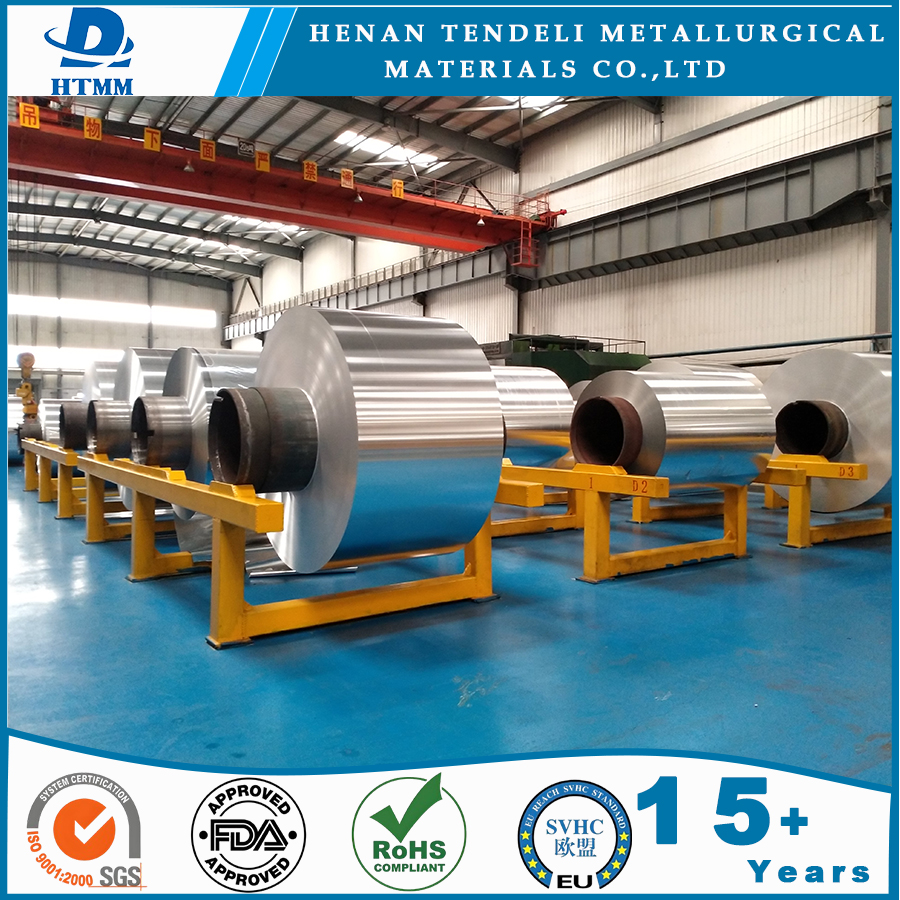
Why is jumbo roll important to you?
You may be wondering: Aluminum foil 8011 is very thin. Why do you have the same packaging style as "mumbo roll"? In fact, it has a lot to do with availability and value.
Large aluminum foil rolls are the basic form that manufacturers supply to food packaging organizations, and can be from 300 to 1,100 mm wide. The length can reach several hundred meters, and the thickness is generally between 6 and 50 microns. When purchasing these large rolls, food packaging companies cut, mix, and print according to specific product requirements, and finally process them into small aluminum foil or composite packaging bags of various specifications and provide them to consumers. With jumbo rolls, an industrial and large-scale supply model, the aluminum foil 8011 can appear in the kitchens of thousands of households with low production costs and high quality stability.
Future choice of green packaging
In today's growing interest in environmental protection, aluminum foil has a “trump card”—100% recyclable and unlimited recycling. The production process of aluminum foil products fully meets the needs of the global circular economy. Recycled aluminum foil can reduce greenhouse gas emissions by about 95% per ton, and recycled aluminum has little loss of quality while maintaining its original performance. This means that small pieces of aluminum foil wrapped in the mixture by hand are likely to be recycled into new aluminum foil in the future. This is to protect the freshness of another food batch.
From yogurt cup lids to take-out lunch boxes, from garlic ribs in the oven to half a watermelon in the refrigerator, the aluminum foil 8011 quietly protects the freshness and safety of three meals a day in an invisible way. After understanding the background story, the next time you open the package, you'll feel even more comfortable with this inconspicuous but amazing “Silver Guardian”—it's worth trusting.