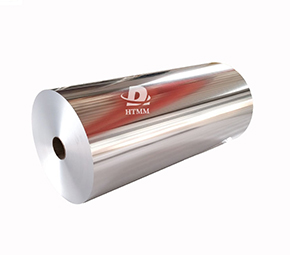
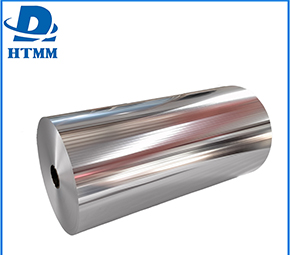
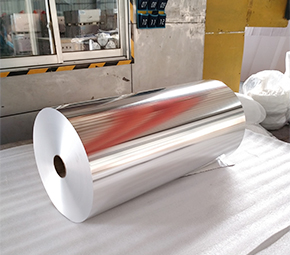
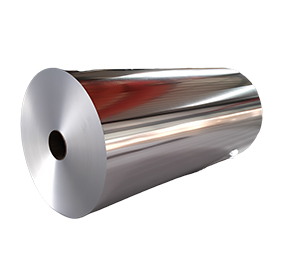
These issues cause output to be delayed, waste to increase, and earnings to directly decline, despite the fact that high-speed production is supposed to boost efficiency and lower costs. The fundamental raw material, Laminated aluminum foil, is frequently the main problem, although many people initially assume the laminating adhesive or machine specifications.
We'll go into great detail about this topic today: why do some laminated aluminum foils regularly cause issues while others operate well with the speed of high-speed lamination? The solution is found in a number of crucial aspects of the raw material, particularly for those who work in the flexible packaging aluminum foil industry and must fully comprehend these intricacies.
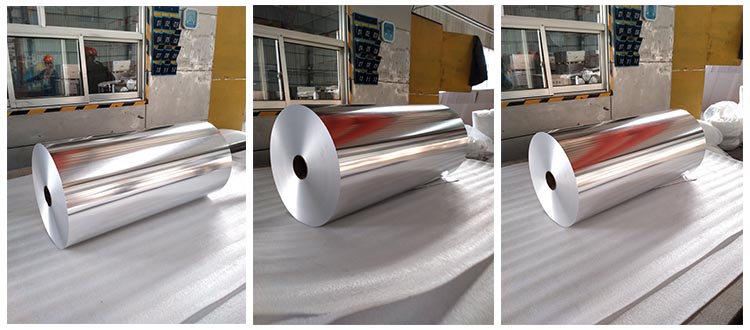
First, it's critical to realize that the surface tension of the laminated aluminum foil is subjected to very high demands during high-speed lamination. Lamination speeds in the manufacturing of flexible packaging usually exceed 200–300 m/min. The aluminum foil surface needs to be sufficiently taut at such high speeds to guarantee that the adhesive sticks firmly.
The end product will delaminate under mild stress if the surface tension of the laminated aluminum foil is less than 38 dyn/cm, which will prevent the adhesive from spreading evenly and create a "loose bond." Before leaving the production, premium flexible packaging aluminum foil is subjected to a unique surface treatment that guarantees a steady surface tension above 40 dyn/cm, satisfying the requirements of high-speed lamination.
Second, in order to avoid tearing and wrinkling during high-speed lamination, the thickness of the laminated aluminum foil must be uniform. Many customers ignore regional variances in favor of focusing simply on the overall thickness. Even a 0.001 mm localized thickness unevenness might cause uneven stress and wrinkling under the tension of high-speed lamination.
As a specialized raw material for high-speed lamination, HTMM aluminum foil material in particular has even more stringent criteria for thickness homogeneity. The lateral thickness deviation may be controlled within ±0.5μm by reputable HTMM aluminum foil manufacturers. This avoids uneven stretching and guarantees stable shape during high-speed operation.
The cleanliness of the laminated aluminum foil surface is another aspect that is frequently disregarded. After the aluminum foil is rolled, a tiny bit of rolling oil could still be present. The adhesive's ability to adhere will be adversely impacted if this oil is not completely eliminated. The lamination effect may be harmed by the oil evaporating and creating bubbles under the high pressure and temperature of high-speed lamination.
Superior flexible packaging Before aluminum foil leaves the factory, it goes through several washing and drying procedures to make sure the surface oil residue is less than 5 mg/㎡. This step is frequently skipped by inexpensive laminated aluminum foil. The advantages will be outweighed by the losses in later lamination phases, even though the purchasing cost is cheaper.
The mechanical characteristics of the laminated aluminum foil are just as important as surface and thickness concerns. Tensile stress is applied continuously on aluminum foil during high-speed lamination. Tearing and film breakage can easily happen if the elongation is too low or the tensile strength is inadequate.
In this sense, HTMM Aluminum Foil Material has a big advantage. After going through a unique metallurgical process, it has a tensile strength of more than 150 MPa and a consistent elongation of about 3%. This significantly lowers production risks by enabling it to endure the strain of high-speed lamination while guaranteeing the flexibility of further processing.
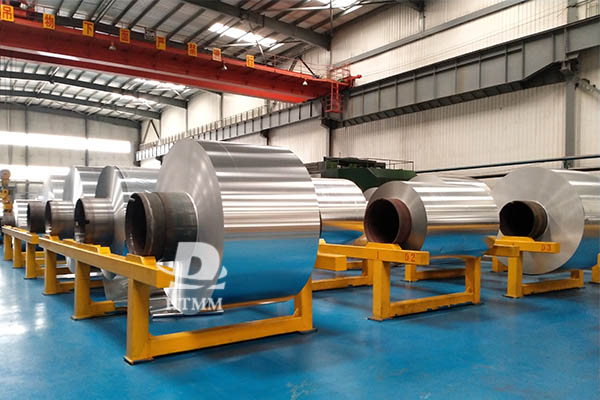
At this point, business owners most likely realize that selecting the proper laminated aluminum foil is crucial and that issues with high-speed lamination are not always caused by machinery or procedures. How can you choose raw materials that are appropriate for high-speed laminating while avoiding pitfalls?
Prioritize items that are clearly marked as "suitable for high-speed lamination," such as HTMM Aluminum Foil material. These materials offer a greater error tolerance since their specs have been specially optimized. Second, always ask suppliers for test reports, paying particular attention to oil residue, thickness uniformity, and surface tension. Products that fall short of these requirements ought to be categorically rejected.
Small-batch trial production is also crucial. The actual compatibility of laminated aluminum foil from different manufacturers may differ even if their characteristics are the same. Before making large purchases, you can avoid major losses by testing tiny samples quickly on your own equipment to make sure there are no problems like wrinkling or delamination.
The effectiveness of high-speed lamination directly affects order fulfillment capacity and profit margins for flexible packaging business owners. The key to guaranteeing high-speed production is selecting the appropriate laminated aluminum foil. Controlling raw material quality from the source is preferable to constantly troubleshooting equipment and reworking after issues occur.
Please get in touch with us if you run into issues with aluminum foil during the high-speed lamination process or if you need to properly match HTMM or Flexible Packaging aluminum foil to your production line. In order to assist you prevent detours and increase production stability, we will suggest more appropriate raw material solutions depending on your lamination method and production speed.