How Aluminium Foil Manufacturers Control Quality from Raw Material to Jumbo Roll
The quality of aluminum foil is determined long before the finished jumbo roll reaches the packing line. Every defect that a converter eventually finds—pinholes, web breaks, oil spots, thickness variation—can be traced to a particular control point upstream. This manual will walk you through the six stages where an aluminum foil manufacturer creates or loses quality.
As an extremely thin material for rolling non-ferrous metals, Aluminum Foil is widely used in food packaging, medicine, electronics, construction and new energy. Its thickness is usually less than 0.2 mm or even less than 0.006 mm. Because it is so thin, any small defect can lead to holes, broken straps, or non-standard performance. Therefore, the quality control of aluminum foil should go through each link from the raw materials to the finished products.
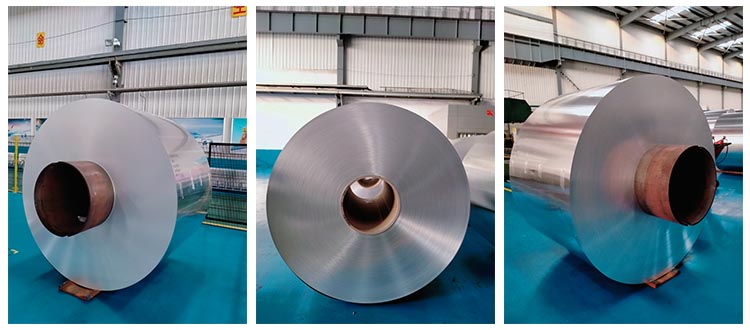
►Why does Aluminum Foil raw material quality determine pinhole performance?
Metallic inclusions and oxide particles in the incoming aluminum are the root cause of a large share of the pinhole defects. When the metal is rolled down to 0.006mm, a particle a few microns across turns into a hole.
This is why raw material inspection is more important in foil production than in most other Aluminum products. Foil is too thin to take contamination that thicker sheet would absorb without showing a defect.
►What gets checked at the raw material stage?
| Check | Purpose |
| Chemical composition analysis | Confirms alloy meets 1235 / 8011 / 8079 / 3003 specification< |
| Inclusion and oxide content | Predicts pinhole risk at target gauge |
| Ingot or coil surface condition | Identifies scratches, oxidation, or contamination |
| Grain structure evaluation | Affects formability and rolling behavior |
| Supplier certification | Traceability back to the smelter |
►How does Alu Foil traceability function?
Every incoming batch is assigned a lot number that travels with the material through casting, rolling, annealing and slitting. If a converter later reports a defect, that lot number allows the mill to trace the problem to a specific run of production, rather than guess.
Aluminium Foil Rolling Process
►How does aluminium become foil?
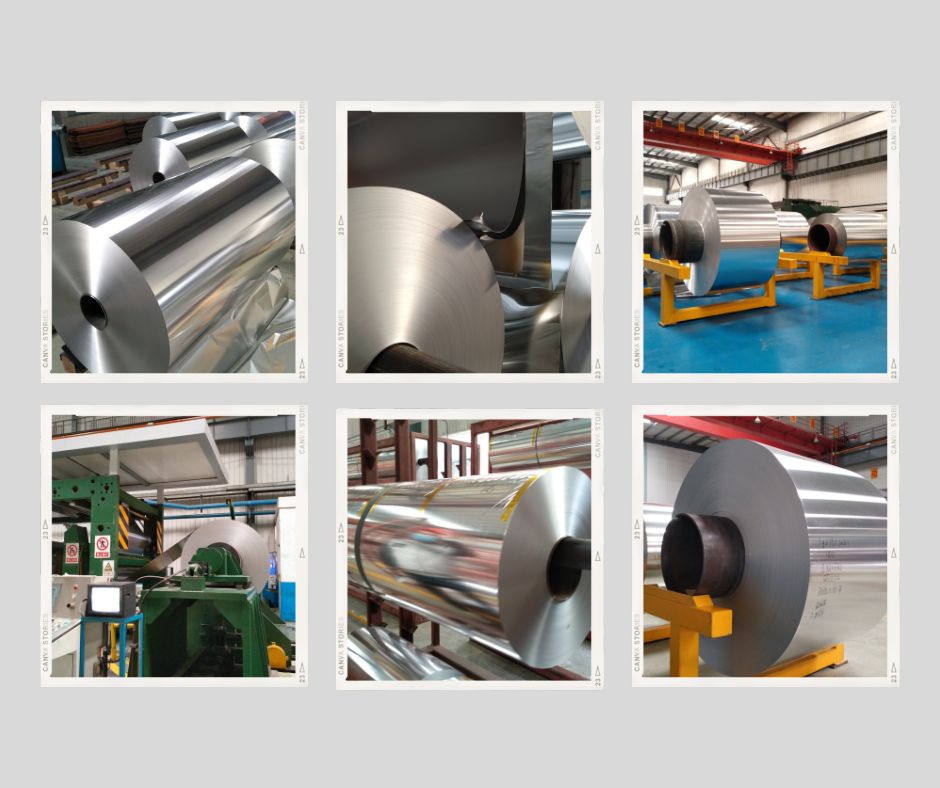 Rolling is the main link in the formation of aluminum foil. Aluminum coils should be coarse, medium rolled and finished and gradually thinned to the target thickness. Modern aluminum foil rolling mills usually use four- or six-roll reversible rolling systems equipped with hydraulic bending rollers, automatic thickness control (AGC) and automatic plate shape control systems (AFC). In the production of aluminum foil, the choice of oil for rolling, the roughness of the rolling surface and the stress control have a direct effect on the quality of the film. The manufacturer monitors the thickness deviation in real time with an online tomer and adjusts the roller seam with a plate sensor to ensure that the film is flat and without wrinkles. In addition, during the rolling process, it is necessary to check for surface defects such as oil stains, scratches and depressions.
The metal is subjected to successive reductions in thickness, in hot rolling, cold rolling, and foil rolling, and each pass changes the grain structure. Foil rolling requires the most stringent process control.
Stage Typical Output Thickness Key Control Concern
Hot rolling Several mm Temperature uniformity, initial grain structure
Cold rolling 0.2–1.0 mm Thickness uniformity, work hardening
Foil rolling 0.006–0.2 mm Roll gap precision, oil cleanliness, speed
►Why is rolling oil so important?
Rolling oil lubricates and cools the work rolls, but it also transfers any contamination directly to the metal surface. Contaminated or poorly filtered oil can cause both oil spot and pinholes.
The oil is continuously filtered and kept within a narrow temperature band by controlled foil mills. Oil cleanliness is monitored on a routine basis, not just when a problem occurs.
What is double rolling?
For the thinnest gages two layers of foil are rolled together in one pass to the desired thickness. That is why ultra-thin foil has one shiny side and one matte side, and why the two surfaces behave differently in lamination.
►How does quality vary with roll speed?
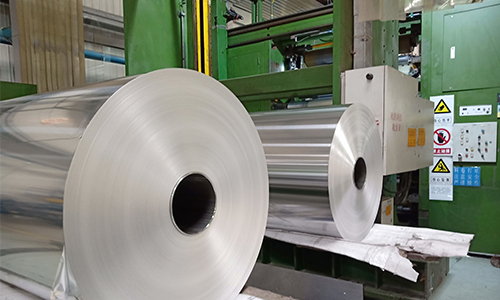
Higher speed increases output, but also increases pinhole risk at thin gages, because less time is available for the roll gap to self-correct. A conservatively running mill at 0.006–0.009mm usually gives better pinhole counts than one
optimizing purely for throughput.
Alu Foil Thickness Control
►How do mills measure thickness during production?
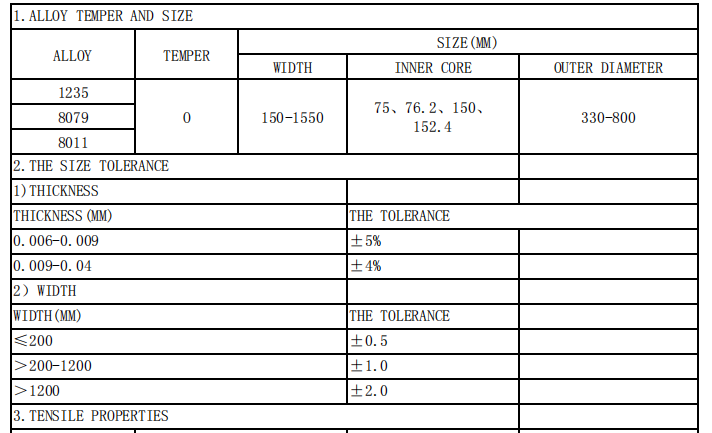 The thickness is one of the most important technical indicators of aluminum foil. Let's take a double-zero foil as an example, the thickness is only 0.006~0.009 mm, which corresponds to a tenth of a hair. Manufacturers use X-ray thickness gauges or beta-rays for continuous non-contact measurements with an accuracy of ±5%. When controlling the quality of aluminum foil, thickness control not only affects the cost, but also determines the performance of the barrier and the mechanical strength. Unequal thickness leads to more points and a decrease in the strength of the composite material. Therefore, each roll of aluminum foil should be randomly checked for thickness after rolling and a deviation curve should be recorded.
Inline x-ray or beta-ray gages measure the thickness of the web as it passes and feed the results back to the mill's automatic gage control system that adjusts the roll gap in real time.
This loop of control is what separates a mill that can hit tolerance consistently from one that spot checks finished coils.
What thickness tolerances should you expect?
Thickness Range Typical Tolerance
Ultra-thin (0.006–0.009 mm) ±5%
Thin (0.01–0.03 mm) ±4%
Medium (0.03–0.10 mm) ±3–4%
Heavy (0.10–0.20 mm) ±3%
Order with written confirmation of tolerances; a loose tolerance means you may be paying for metal you didn't specify.
►Why is uniform thickness important to converters?
Edge weave, telescoping and web breaks are caused by unequal tension on a web rewinder due to variation in web thickness. Variation along coil length leading to inconsistency in barrier performance in final package.
What is crown and profile control?
“Profile” is the variation in thickness across the width of the web, and “crown” is the slight difference in thickness between the center and edges. These are controlled by Mills through roll bending, roll cooling zones and work roll grinding schedules.
Surface Quality
The quality of the surface is directly related to the performance of the packaging and the appearance of the aluminum foil. Manufacturers usually use online surface inspection systems (e.g. CCD cameras) in combination with manual inspection. The hole detection uses the light transmission method: when aluminum foil passes the light source, the chiseled hole light escapes and is detected by the sensor. For films with a double zero, the number of holes is strictly limited, for example no more than a few per square meter. When controlling the quality of the aluminum foil manufacturer, the cleanliness of the surface is no less important. Residual oil, aluminum powder or water stains affect the subsequent coating, mixing and pressure. Therefore, the rolled aluminum foil must be degreased or cut and cleaned.
 What surface defects should be controlled?
Defect Common Cause
Pinholes Inclusions, oil contamination, excessive speed
Oil spots Residual rolling oil not fully removed in annealing
Scratches Damaged rolls, guide rollers, or handling
Oxide streaks Contamination in the raw material or rolling stage
Gloss unevenness Inconsistent roll surface finish
Wrinkles Uneven web tension during rolling or rewinding
Edge cracks Over-hardened temper or poor edge trimming
How are pinholes detected?
Finished foils are inspected by either passing over a light box or through an inline pinhole detection system which uses light through the web to reveal holes. Results are given as the number of pinholes per square meter, the standard metric in the industry.
Ask for this figure from your particular gage, not a general claim for quality. If a supplier is unable to provide a pinhole count per square meter, they are probably not measuring systematically.
Surface cleanliness control for pharmaceutical and food foil What is it?
Residual rolling oil must be burned off during annealing to meet food contact and pharmaceutical requirements. This is confirmed by Mills by wettability and odor testing of annealed samples.
This is not a cosmetic issue, residual oil in food packaging foil can result in odor transfer as well as poor lamination adhesion so this is a critical control point.
Mechanical Properties
Which mechanical properties are tested?
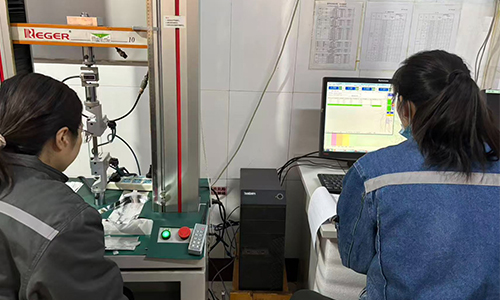
Property What It Indicates
Tensile strength Resistance to breaking under tension; confirms temper
Elongation Ductility; important for deep-draw, forming applications
Value for Erichsen cupping Formability of cold forming blister foil
Consistency of winding tension Roll hardness, unwinding behavior
What is the relation of temper and mechanical properties?
Annealing temperature controls the strength-ductility tradeoff. Testing confirms the delivered material is actually the ordered temper.
Temper Character Typical Use O (soft) Most ductile, least strong Container forming, deep drawing, lamination
H14 Medium Hard General packaging
H18 Fully hardened, maximum strength Rigid applications, cable wrap
H22 / H24 Strain-hardened, partially annealed Semi-rigid containers
Why is elongation important in pharmaceutical foil?
The ability to stretch the foil into deep pockets without cracking is what makes cold-form blister packaging possible, and this ability is almost entirely dependent on elongation. If it lacks elongation, microcracks will form that break the moisture barrier — often not visible until the packed product fails stability testing.
How do we control an annealing?
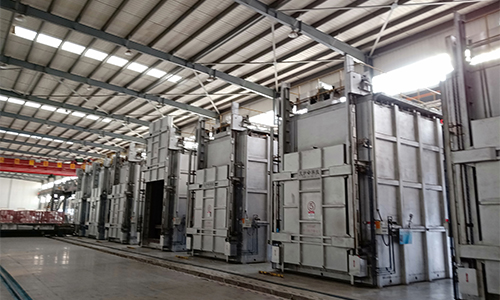
Annealing furnaces hold coils at a controlled temperature for a certain cycle to obtain the desired temper and to remove the remaining rolling oil. Temperature uniformity across the coil is important because uneven annealing results in inconsistent properties between the outer and inner layers of the same roll.
control of aluminum foil is usually combined with automated equipment and laboratory tests. Each roll of aluminum foil has a unique tracking code that records all process parameters from raw materials to finished products. Once the customer calls back the problem, the cause can be found quickly.
From raw material testing to rolling, thickness control, surface treatment, mechanical performance testing and then to the final inspection of giant coils, the manufacturers of aluminum foils ensure that each aluminum foil roll meets the strict application requirements with the help of inspection layers. The quality control of aluminum foil is not a task, but a system project that goes through the entire process. Only by integrating the concept of film quality into each process can we produce aluminum foil products without defects and gain the trust of the market.