Price of Aluminum Foil: What Influences the Price of Jumbo Roll?
When ordering aluminum foil in large quantities, the price of aluminum foil is rarely influenced by just one factor. The final quotation of aluminum foil jumbo rolls is affected by the price in the raw metal market, alloy used, thickness of the foil, its width, quantity ordered, requirements for processing, logistics and transportation of aluminum foil.
Knowing key factors affecting the cost of aluminum foil helps buyers make better comparisons between quotes, so they don’t end up choosing a vendor based only on the lowest number. It is especially crucial for bulk purchases as even a small difference in price per kg makes a great impact on the total cost of aluminum foil.
Aluminum Foil Price: How Do You Define It?
To calculate an approximate price of aluminum foil jumbo rolls, one needs to factor in the cost of raw material, manufacturing costs and expenses of processing and delivery.
The following table summarizes the major factors that influence the final quotation:
| Factor | How It Affects Aluminium Foil Price |
| Aluminium price | Changes in primary aluminium prices directly influence material costs |
| Alloy | Different alloy compositions have different production costs and performance |
| Thickness | Thicker foil generally requires more aluminium per square meter |
| Width | Special widths may require additional slitting or production adjustments |
| Quantity | Larger orders can reduce the average processing and packaging cost |
| Processing | Embossing, coating, oiling, slitting, rewinding, and printing add costs |
| Freight | Destination, shipment method, container utilization, and freight rates affect landed cost |
Price of Aluminium
To understand what aluminium foil costs, it is very important to know the price of aluminium.
The production of aluminium foil begins from aluminum foil stock, hence any shifts in the aluminium prices directly affect the total price. For instance, when the cost of aluminium rises, it pushes up the costs for aluminium foil manufacturers. Conversely, when there is a decline in aluminum prices, the prices of aluminium foil will be more competitive depending on inventory and production schedules.
However, the correlation does not always fit perfectly. Further on, the prices offered by the manufacturers may also contain raw material costs, and conversion costs.
Thus, clients should not only rely on the rates of aluminium materials. The price of the product contains the added value already.
Aluminium Foil Raw Materials Alloy
Alloy is another important influencing element when it comes to the pricing.
8011, 8079, 1235, 3003, 3004, and 8006 is aluminium foil for packaging. Different alloys are characterized by different strength, ductility, formability, and processing characteristics.
Thus, for instance, 8011 is widely-known and used for catering and packaging. High-purity materials such as 1235 are used for flexible packages.
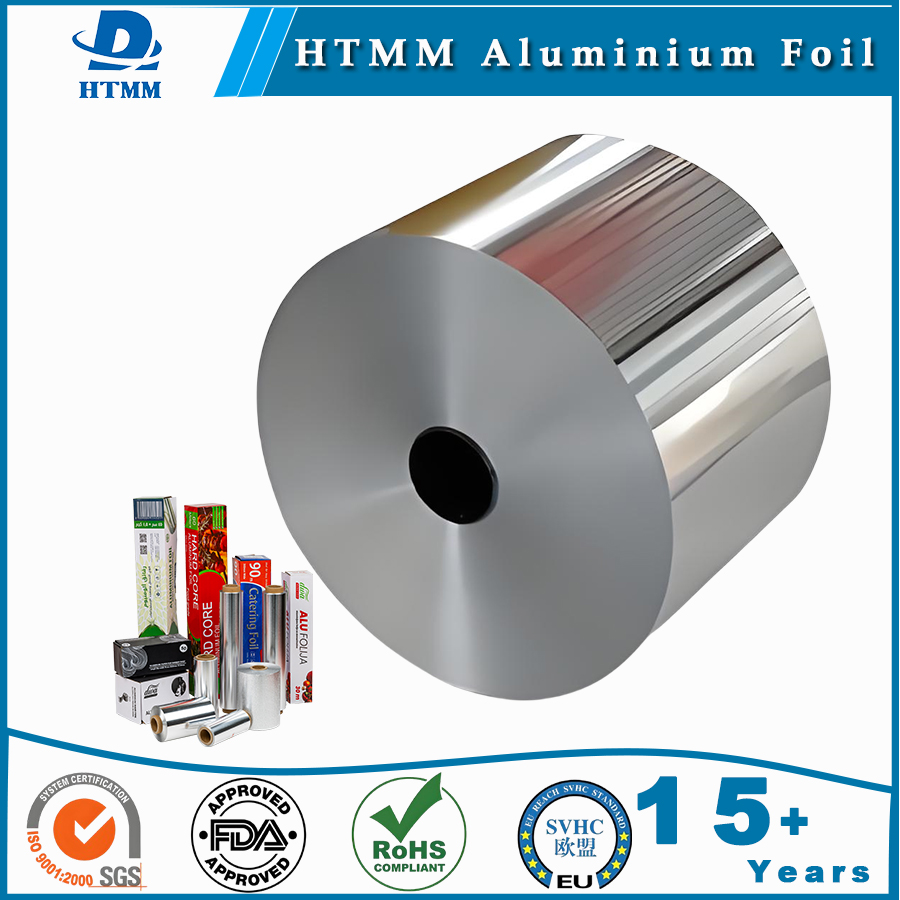
Aluminum foil for household use comes in the form of soft-temper aluminum foil with 8011-O being its specification. Its applications include cooking, baking, food storage, catering, and wrapping.
Specifications of Aluminum Foil for Household use may include:
Alloy 8011-O
Thickness around 8-30μm
Width commonly used 280-600mm
Common Dimensions 300 mm and 450 mm.
Core ID common sizes of 76mm and 152 mm.
Forms used in jumbo rolls, master rolls, and rewound small rolls.
Household aluminum foil can also be customized with various thicknesses, widths, rolls lengths, core sizes, packaging methods, embossing, and surface treatment.
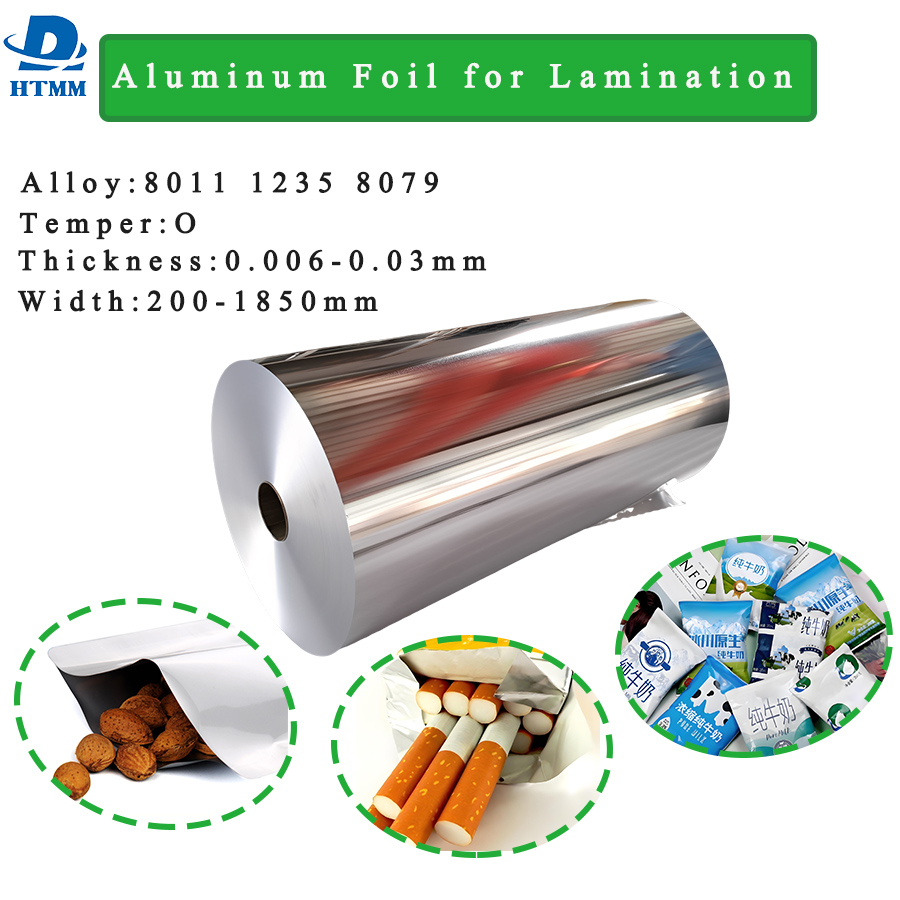
Specifications of Aluminum Foil for Flexible Packaging use may include:
Alloy 8011 1235 8079 -O
Thickness around 6-30 Micron
Width commonly used 200-1850mm
Core ID common sizes of 76mm and 152 mm.
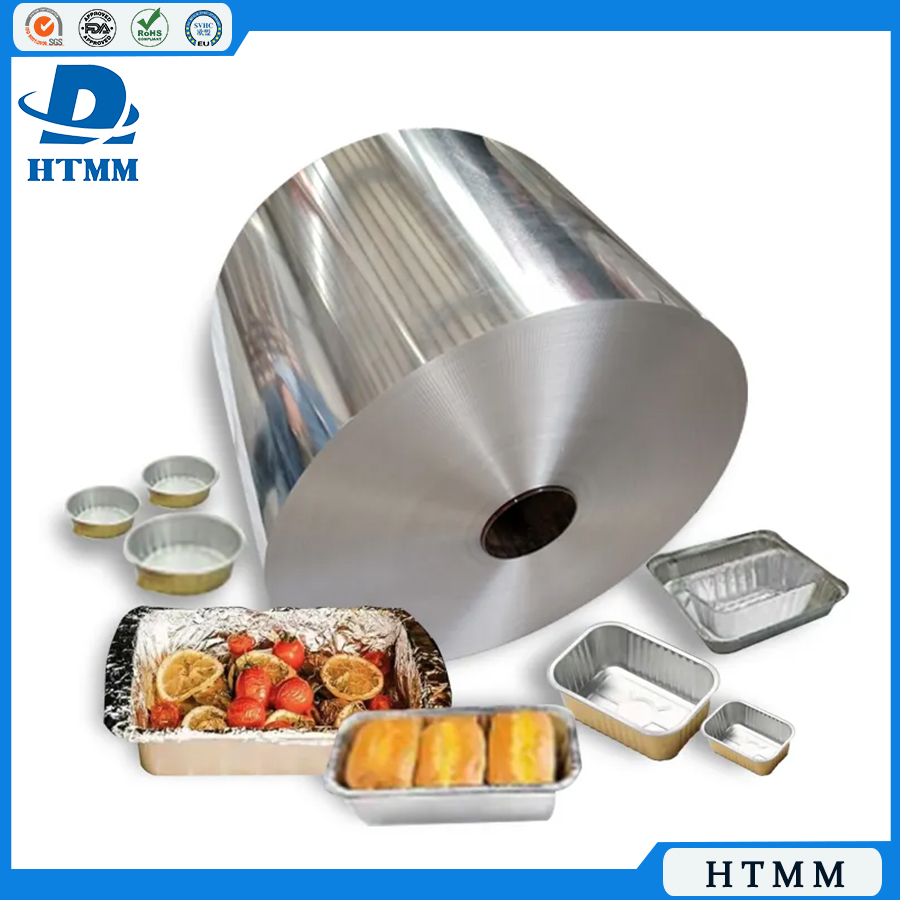
Specifications of Aluminum Foil for Making Food Container use may include:
Alloy 8011 3003 3004 -H22 H24
Thickness around 30-150 Micron
Width commonly used 200-1300mm
Core ID common sizes of 76mm and 152 mm.
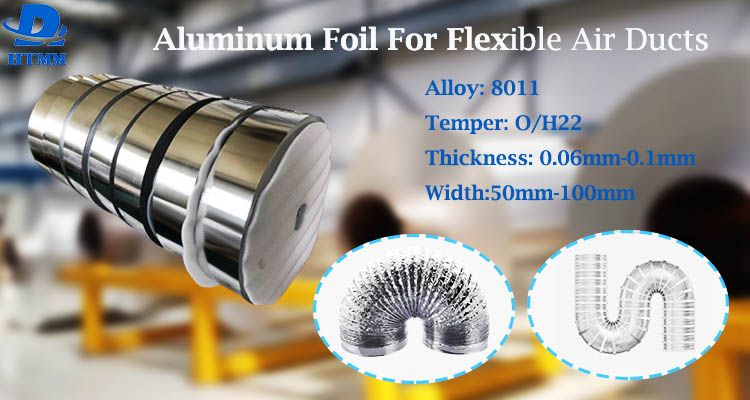
Specifications of Industrial Aluminum Foil Roll may include:
Alloy 8011 3003 1235 -O H18 H22 H24
Thickness around 6-200 Micron
Width commonly used 50-1850mm
Core ID common sizes of 76mm and 152 mm.
Since selection of alloy will impact both the characteristics of the material as well as requirements during manufacturing, it is important for buyers to indicate their end use before comparing aluminum foil costs.
Aluminium Foil Raw Materials Thickness
The thickness of aluminum foil influences the cost of aluminum foil jumbo roll.
Thickness requires more aluminum weight for the same surface area. Thus, for a given surface area 20μm foil will require much more material than a 10μm foil.
As an example, the thickness of aluminum foil may commonly range from 10 to 20 μm, while flexible packaging may be produced in thinner foil with thicknesses such as 6 to 12 μm. However, the thickness of container foil can vary widely from 100 μm and above, depending on the required forming process.
The importance of using the same alloy, thickness, width, and temper when comparing quotations may not be underestimated, because comparing 10 μm to 12 μm quotations without taking this into account may end up being misleading when trying to define the price of aluminum foil jumbo roll per kg or project.

Aluminium Foil Raw Materials Width
Does a jumbo roll’s width affect the price?
” Width influences price more through mill utilization than the material itself. Mill widths that use the mill’s rolling capacity effectively tend to cost less per ton than odd or narrow custom widths that result in material wasted in the edge trim.
Should you buy pre-slit narrow rolls or slit in-house?
Ordering the mill's efficient width and slitting it yourself to width is often less expensive than paying for narrow pre-slit rolls, especially if you have slitting capability, as slit width adds a separate processing step and increases edge trim loss.
The quotation also significantly depends on the width.
Standard widths are much easier for the manufacturers to be produced, while uncommon or very narrow widths may require some slitting or rewinding operations.
For example, household foil may be produced at the width of 300 mm or 450 mm; customized widths are also possible upon customer’s request, depending on the packaging machine.
As a result, the price of a jumbo roll with customized width may differ from the price of standard-width rolls even when the thickness and the alloy are the same.
Aluminium Foil Raw Materials Quantity
The quantity ordered plays a huge role in the aluminum foil cost.
The greater the quantity in the order, the more the manufacturers will be able to disperse all the costs related to production setup, testing, packaging, and administration over the number of tons purchased. This results in a lower average unit cost.
For example, the quote for 10+ tons can be totally different from that of a small trial order. The regular customers can also expect more attractive prices compared to an average consumer because production and buying raw materials is more straightforward for them.
While asking for a quotation, customers need to indicate:
Total quantity needed
Required quantity per specification
Number of sizes to be produced
Schedule
Packaging preferences
Providing full information allows the producer to offer a more precise quote.
Processing
Not all aluminum foil jumbo rolls are provided in plain, unrefined foil.
The additional processing will raise the aluminum foil price, and this includes:
Slitting
Rewinding
Embossing
Oiling
Coating
Lacquering
Hydrophilic or hydrophobic treatment
Printing
Modified packaging
Non-standard core sizes
Other width/diameter sizes
For instance, a bare 8011-O jumbo roll will not cost the same as a foil coated and embossed and packed specifically.
The characterization of whether the foil will be utilized in its raw, laminated, coated, printed, or rolled form is of primary importance to packaging producers.
The cost of shipping has a huge impact on the final product price.
Whether the price quoted for the aluminum foil is based on EXW, FOB, CIF, or some other trade terms, the buyer must be aware of what exactly is included in the quote while comparing suppliers.
Freight costs depend on:
The point of destination
The type of transport
Availability of containers
Sea freight rates
Cargo weight and size
Dimensions of packaging
Insurance
Handling cost
The aluminum foil is rather heavy, which makes efficient loading of cargo significantly important in this case. An experienced supplier with regard to packaging and loading may help the customers save on logistics.
To receive a proper quote on aluminum foil jumbo rolls, it is important that buyers offer the much technical information they have.
It is vital for customers to evaluate producers on the basis of overall aluminium foil specifications and prices instead of just choosing the vendor that offers the cheapest jumbo roll product. A good supplier ought to be able to supply all necessary specifications, ensure constant quality, competitive pricing, correct packaging, and reliable delivery.
In the case of household aluminium foils, flexible packaging, food packaging, or anything else, specifying the needed requirements allows the producer to select the proper alloy and specification and calculate the most accurate price per kilo for aluminium foil jumbo roll.