8011 vs 3003 Aluminium Foil
When it comes to aluminium alloys, selection plays a crucial role for food container manufacturers in search of efficient forming characteristics, required strength, corrosion resistance, and cost-effectiveness. Upon the comparison of 8011 with 3003 aluminium foils, it becomes clear that both of these alloys are beneficial for food packaging but differ from each other in their chemical composition and mechanical properties.Understanding the difference is very useful for manufacturers making disposable aluminium trays, delivery boxes, airline meal trays, and other packaging products, so their basis of successful production will differ.
8011 is one of the aluminium alloys which comprise iron and silicon as the primary alloys. It is very popular nowadays because of the factors like good formability, useful strength, and good cost.
3003 aluminium foil belongs to aluminium-manganese alloy series and manganese improves the strength of the alloy in comparison to the commercially pure aluminium, which allows it to be used in applications that require the enhanced rigidity of the structure.

The choice of Alu foil for food containers depends on the design of the container, the wall thickness, the forming depth, the mechanical characteristics, and the manufacturing equipment.
Comparison 8011 Aluminium Foil 3003 Aluminium Foil
Main alloying elements: Iron and silicon Manganese
Strength: Suitable for many conventional container designs Generally higher strength in comparable tempers
Formability: Good, depending on temper and forming conditions Good, depending on temper and forming conditions
Corrosion resistance: Good for many food packaging applications Good for many food packaging applications
Typical application:s Food containers, lids, packaging foil Aluminium trays, meal containers, deeper-drawn products
Main advantage: Cost-effective performance and versatility Higher strength and structural rigidity
The efficacy of materials is determined by alloy structure, alloy heat-treatment condition, thickness of the alloy, the structure, and the forming conditions. That is, one must compare material based on specific types of materials instead of just referring to the nature of the alloy.
♦ Composition
In terms of the difference between the two alloys, one of the most considerable differences is that 8011 aluminum foil is composed of different elements from 3003 aluminum foil.
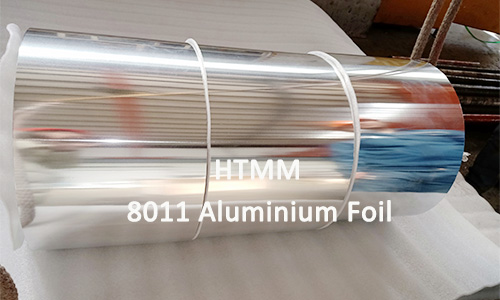
8011 Aluminum Foil
This type of aluminum foil is composed of various elements that give it different properties such as iron and silicon.When it comes to manufacturing food containers, utilizing aluminum foil type 8011 is an effective approach.
3003 Aluminum Foil
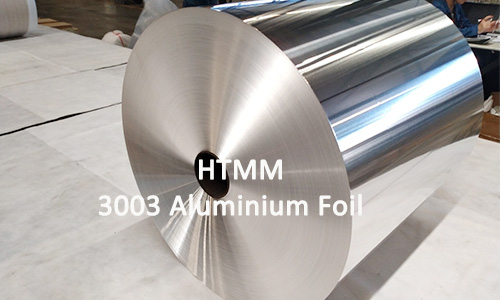
This aluminum foil has manganese, which is the main alloying element and includes smaller amounts of other elements, including Si and Fe.
Manganese is contributing to the strength of the alloy thus allowing it to be produced and suitable for different products requiring high strength.
In general, it is necessary to clarify which alloy standard and chemical composition is required when buying either of the types mentioned above.
♦ Importance of Strength
Strength is an important factor when considering the options of 8011 and 3003 aluminum foil.
Ultimately, 3003 has more strength than 8011 in similar situations, with tensile strength and yield strength greatly depending on thickness, temper, and the processing history.
Choosing 8011
8011 is useful in many usual food container designs, achieving necessary strength through the right thickness and manufacturing processes and helping to keep raw material prices at acceptable levels.
Choosing 3003
However, the alloy 3003 is an option to choose when rigidity, minimal competency in terms of deformation, or better structure is needed. It is helpful in some kinds of trays used in food delivery, catering, and aviation meal service.
Still, a stronger alloy does not necessarily provide a better container. Instead, the wall thickness, geometry, manufacturing conditions, and flange construction influence rigidity and load-bearing capacity.
♦ Formability
Formability indicates the ability of plastic material to be formed into a final product without the occurrence of any significant internal failures such as cracks, tears, lower thicknesses than the required ones, or wrinkles.
Formability in case of 8011 Aluminium Foil
8011 Aluminium Foil has a good formability level if the correct temper, thickness, and material purity are chosen. It can be considered as a good option for many conventional designs of food-containers, and it can prove cost effective if the production is high-volume.
In any case, the deep drawing ability should be tested with actual tool and forming conditions because this cannot be inferred from the alloy number.
Formability of 3003 Aluminium Foil
3003 foil is commonly used for forming application, particularly in cases when the strength and rigidity matter. However, the suitability for deep-drawn containers will depend on its temper, thickness, lubrication, and container shape complexity.
When comparing 8011 and 3003 foils in terms of food-container fabrication, manufacturers should perform forming tests to amount cracking, wrinkling, accuracy of dimensions, and strength of the finished container.
♦ Resistance to Corrosion
Both 8011 and 3003 aluminum alloys have a natural way of forming a thin aluminum oxide layer that protects the underlying aluminum from corrosion.
To determine how aluminum foil would perform in food applications, it is necessary to consider alloy composition, but also the food composition, temperature, humidity, storage conditions, and duration of contact with food.
For instance, acidic and salty food could create harsher conditions than dry foods. In some applications, it might be necessary to use protective coatings or suitable packaging systems.
While 3003 is generally known to have a decent resistance against corrosion in common environments, 8011 performs well in many packaging applications as well. Nevertheless, it cannot be assumed that any of those alloys are equally fantastic in terms of contact with any food type.
It is important to check if a packaging system is suitable for a particular food type.
 ♦ Usage of 8011 and 3003 Aluminium Foil
There are various container designs with each design having its different requirement in terms of aluminium type.
Usage of 8011 Aluminium Foil
8011 Aluminium foil can be used for:
- Regular disposable aluminium food containers.
- Food packaging lids and other related products made of aluminium foil.
- Catering containers manufactured while keeping material cost and production process in mind.
- Traditional trays which are too strong for the thickness chosen for them.
Due to its versatility and cost-effectiveness of performance, manufacturers producing aluminium packages in bulk find it useful.
Usage of 3003 Aluminium foil
3003 aluminium foil is suitable for:
- Aluminium food trays, which need to be more rigid.
- Airplane meal containers and catering trays.
- Containers with difficult construction requirements.
- Some specific formed aluminium product used in the market.
The application will change according to the characteristics of the material such as temper and thickness, depth of forming, and the method of production chosen by the manufacturer.
Things to Consider When Choosing Aluminum Foil for Food Packaging
Before buying aluminum foil for food packaging containers, a manufacturer should consider the following factors:
1. Container Design: Determine whether it’s a shallow-forming, a deep-draw, or a container requiring an increased rigidity.
2. Thickness of Material: Ensure the selected thickness is sufficient to satisfy the strength and the forming requirements.
3. Alloy and Temper: Include the alloy and temper requirements, that is the data about whether the foil has the proper annealed or other format.
4. Lubrication Requirement: Find out if lubricated foil or foil without lubrication is required.
5. Surface Quality: Look for such issues as pinholes, scratches, residue of oils, and similar defects.
6. Price and Supply: Prices for the material, the yield of production, delivery lead times, and supplier stability should be compared.
7. Which is Better: 8011 Aluminum Foil or 3003 Aluminum Foil?
The 8011 and 3003 aluminum foil comparison does not lead to a definite conclusion. The optimal alloy is the one that meets your specifications and manufacturing requirements at an acceptable price and total cost.