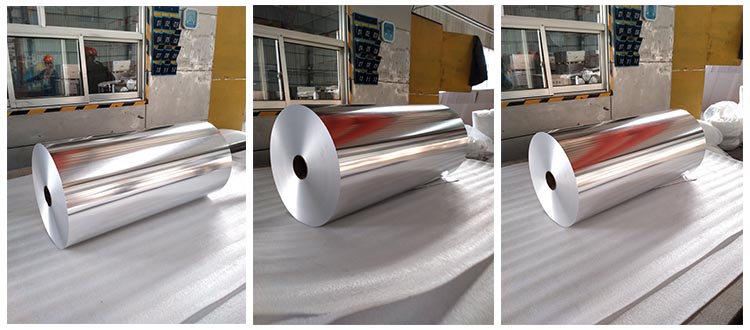
1. recognized "double zero foil ": is very thin strength and barrier
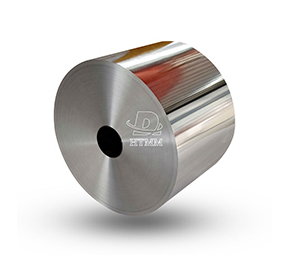
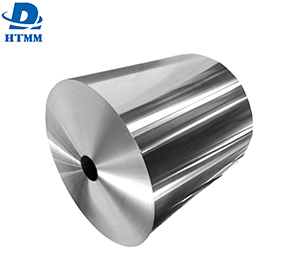
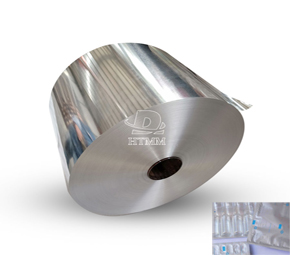
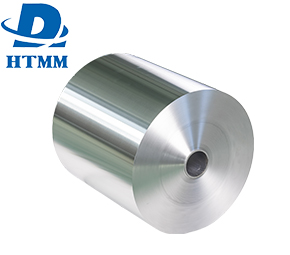
"Double zero foil" is not a special alloy, but a high-grade aluminum foil divided by thickness. It inherits aluminum's lightness, high conductivity, non-magnetic properties, and environmentally friendly recyclability, and combines its unique performance with its thinness.
Superhuman flexibility and shielding: its thickness is about a tenth of the diameter of a hair, but it can provide an almost absolute barrier to water vapor, oxygen, light and microbes. This makes them the first choice for stabilizing the flavor, safety, and efficacy of food products.
Lightweight and space-saving: premised on the use of double zero foil, it saves warehouse and transportation space to ensure the same barrier effect and meets the green and high efficiency concept of modern industry.
Extra-uniform surface: high standard double zero foil requirements the surface is clean and free, visible needle holes, stripes and oil stains, this is not only a beautiful need, but also the key to the integrity of its barrier function.
However, in order to achieve this "thin but not weak, dense and uniform" property, extremely strict control is required from the original aluminum material.
2. Core base: special requirements of raw materials
Aluminum ingots with a thickness of a few millimeters are rolled several times and continuously stretched to less than a hundredth of a millimeter without rupturing, with uniform performance, which is a special challenge to the quality of the original aluminum material. The production of double zero foil can be said to be "wrong", but its raw materials must meet the following some special requirements:
Extremely high metallurgical purity
This is the most basic and important requirement. Non-metallic mixtures (oxides, nitrides, etc.) and harmful gases (hydrogen, etc.) in aluminum solution are "natural enemies" of foil materials.
Intrusions control: any fine hard granules can become stress centers in the subsequent rolling process, resulting in needle holes, cracks and even breaks on foil stamping material. To produce double zero foil, use the high degree of purity of aluminum (for example, aluminum or higher grade with ≧99.85%), through severe melting purification and filtering (using ceramic plate filter technology, etc.) It is necessary to remove impurities to the maximum extent possible.
Hydrogen content control: when hydrogen dissolved in molten aluminum solidifies, it precipitates, forms fine bubbles, and after thin rolling, it forms needle holes. The melting process must therefore have efficient linear gas removal (usually using rotary or ultrasonic gas removal) and very low hydrogen levels (0.12ml/100g Al).
Precise alloy component design.
Although primarily pure aluminum, trace amounts of alloying elements such as iron (Fe), silicon (Si), and manganese (Mn) are added to improve processing performance and some properties of the end product (e.g. strength, surface brightness).
Accurate element composition ratio: the content of each element must be kept within a very narrow range. For example, the ferrica ratio (Fe/Si) must be optimized to form favorable intermetallic compounds in the rolling process, grain granularity must be refined, the material's plastic deformation ability improved, and edge cracking must be prevented during thin rolling.
Control of harmful elements: elements such as titanium (Ti), vanadium (V), chromium (Cr) can form thick compounds, but the ductility and surface quality of the material of serious damage limit their content to very low levels It must be.
3. Excellent rolling tissue uniformity
Since the aluminum liquid is cast into the fabric before rolling, the uniformity of the internal structure is crucial.
Miniaturization: it is necessary to obtain fine isoaxial crystal structure by adding a miniaturizing agent such as aluminum titanium boron. When the columnar crystal is thick, the material becomes anisotropic, and when it is ground thin, it is easy to break.
Minimize segregation of components: in the casting solidification process, it is necessary to control the cooling rate through advanced casting processes (hot top casting, electromagnetic casting, etc.), but in order to ensure the alloy elements in the cross section distribution of the plate, local performance There is a uniform distribution to avoid weak areas.
4. Excellent plate shape and surface quality.
As the initial rolling material, the flatness and surface condition of the aluminum fabric itself directly affect the quality of the foil stamping material of the finished product.
Control of plate shape: the thickness of the material must be uniform and there is no internal stress, otherwise the shape of the plate in the later thin rolling is difficult to control, prone to wrinkles and waves.
Surface pretreatment: the surface of the blank is uniformly milled to remove the oxide layer and surface defects to provide a clean, smooth starting point.
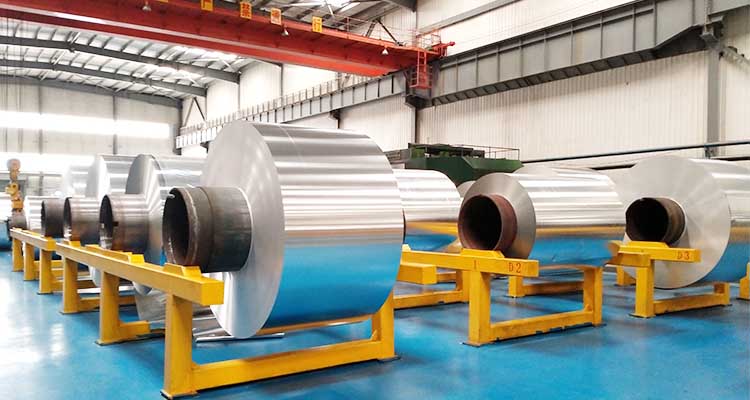
Double zero foil, precision products of this modern industry is the perfect interpretation of the philosophy that "the foundation determines the height". Its lightness, strength, and precision have never been derived from excellent rolling technology, but from the purity of the furnace's aluminum liquid, the precise formulation, and the uniformity of the base. The special requirements of each material are to ensure that aluminum is in the most perfect and fragile condition, withstands thousands and millions of stretches and deformations, and becomes the ultimate metallic sheen veil.
For prospects, understanding the rigors of raw materials is key to identifying high added value and reliability. When choosing double zero foil products, it is essentially to choose a top-class quality assurance system from a set of sources behind them. The beauty of the roots of this material is the ultimate barrier to product safety, efficacy and value. HTMM is a Double zero aluminium foil manufacturer in China. We could supply 6 micron-200 Micron Thickness aluminium foil. If you are intereste.please contact HTMM Sales team.