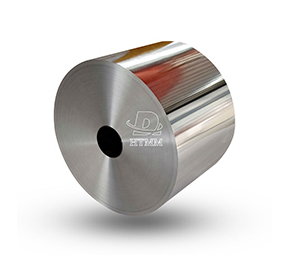
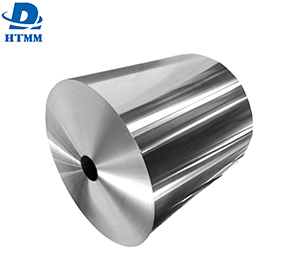
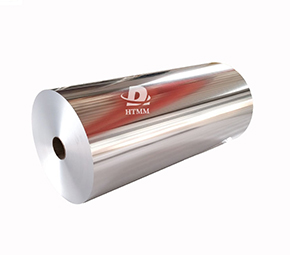
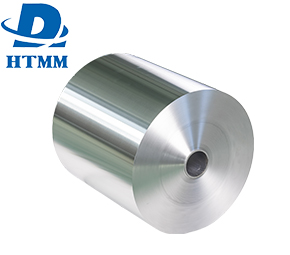
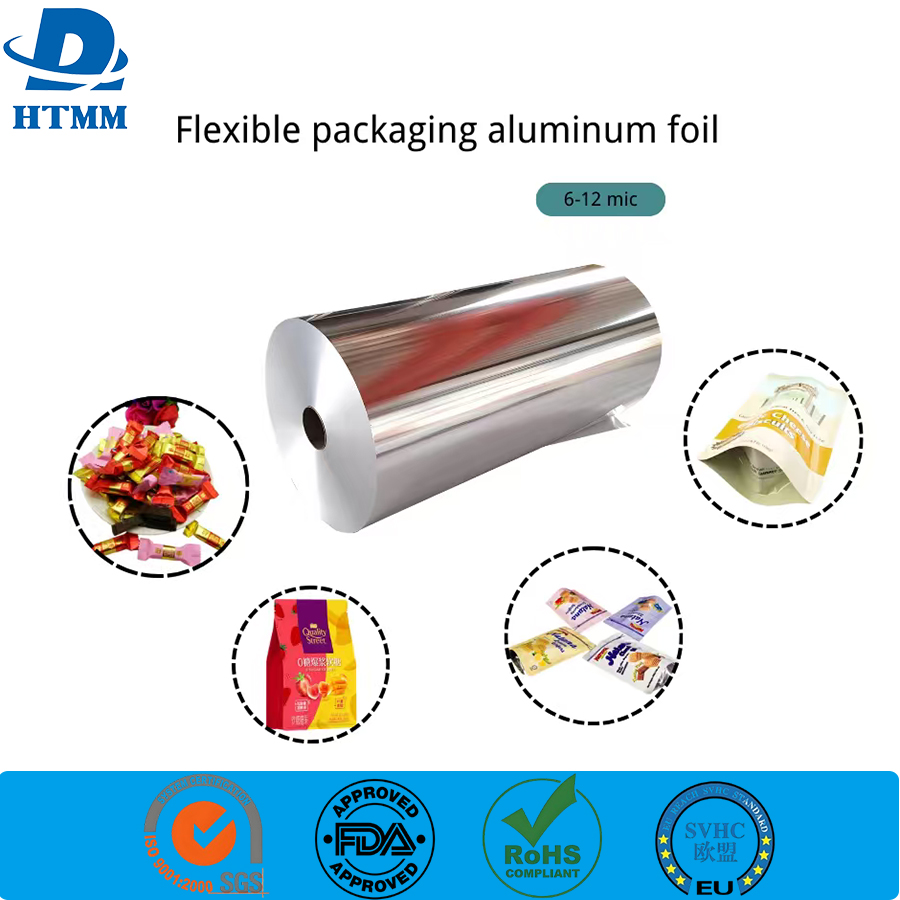
 When consumers hear about "Aluminum Foil of 6 to 9 Micrometers", they may ask, "how is it different from the aluminum foil used in the kitchen that I usually buy at the supermarket?" This is a completely different concept aluminum foil that you often see on supermarket shelves is about 15 to 30 microns thick and has a thick texture. On the other hand, the 6-9 micrometer aluminum foils, which we will talk about today, are "double zero class ultra-thin aluminum foils" that have a thickness unit of micrometer equivalent to 1/1000th of a millimeter, and have excellent barrier performance in that range.
This thin aluminum foil is the shadow driver of many high-definition products. It is used for the core parts of capacitors used in the electronics industry (usually more than 99.99 percent aluminum purity), as a barrier for high-grade packaging (to ensure the freshness of pharmaceuticals and food), and as a fluid collection for new energy lithium-ion batteries. . Because the application scene is so detailed, we should not choose a manufacturer based on the idea of "buying plastic wrap" when selling wholesale. The following 10 questions are "customs clearance documents" that you must check with your suppliers before you pay for the notes.
Question 1: which areas do you make aluminum foil specifically? Are you eligible to respond?
Ultra-thin aluminum foil is meaningless in pure thickness indicators and must serve the concrete scene of the industry. Food packaging aluminum foil must meet the national standard GB 4806 series or food level safety inspection report of the FDA(food and drug administration). Aluminum foils for pharmaceutical packaging must be certified in accordance with USP(U.S. pharmacopoeia) standards and in a clean manufacturing environment. You can also request ISO 9001 quality management system certification. For export and advanced areas, you can use ISO 9001. 2you should also check whether you have a passage certificate such as food safety management system or iatf16949(automotive industry quality management system).
Question 2: what is the production number? Pure aluminum or alloy?
Many buyers focus only on the "thickness" and overlook the fact that aluminum foil plates are the "genes" that determine mechanical performance. 1235, 8011, 1060, 1100 and so on are common. 1235 aluminum foil belongs to high purity, aluminum content has very good conductivity and ductility, and is very suitable as a capacitor or high-end soft package. 8011 alloy, which contains certain other elements, has advantages in rolling stability and cost, and is mainly used in food packaging and disposable containers. If the "aluminum id" of the company's product is ambiguous, the quality will not improve.
Question 3: how many microns can the thickness tolerance be controlled?
In a world of double zero, thickness uniformity determines the success rate of post-processing. If the thickness of a roll of aluminum foil, which is said to be 9 microns, fluctuates greatly in actual production, not only will it fold during printing, but it may also break frequently on automated packaging lines. You should ask the vendor clearly for its control standard, generally the national standard GB/T 3198, thickness tolerance should be controlled within ±5%; On the other hand, strict tolerances of ±2% or higher are required for electrical capacity and thin aluminum foil for lithium-ion batteries. Please be sure to ask the manufacturer to provide the inspection data of this lot thickness, not only oral consent.
Question 4: what level is the number of holes in the needle controlled? Do you have the inspection data?
Pinholes are the biggest enemy of thin aluminum foil production. Invisible pinholes on the surface of the aluminum foil, no matter how thick the foil meets the standard, can be fatal in strict packaging and electronic applications, as the ability to block off oxygen and water vapor is completely lost. You must have the manufacturer present you with a pinhole inspection report and give you a clear pinhole density index per square meter. Normal requirements for food packaging aluminum foil does not exceed 0.3mm diameter, density of 5 / square meter. A reputable manufacturer can produce a needle with extremely few or nearly perfect holes, but a smaller manufacturer with less technical expertise cannot solve this problem.
Question 5 : What is the purity of aluminum? Is the content of the impurity element controlled?
Don't be fooled by the two words "pure aluminum", the purity of aluminum is very far between different grades. The purchase of aluminum foil actually USES 99.5% or more of standard industrial aluminum, or 99.9% or more of high-purity aluminum content, directly affect its corrosion resistance and conductivity. For food and pharmaceutical applications, the focus must be on whether the transfer of heavy metals, especially lead and cadmium, meets safety limits. Manufacturers such as SGS who provide third-party component analysis reports are much more reliable than those who provide verbal assurances.
Question 6: what is the data of strength and stretching rate?
The aluminum foil of 6 ~ 9 micron is exposed to the risk of failure in the packaging machinery and pressing equipment running at high speed. Tensile strength (usually ≧80MPa) and elongation are hard indicators of machine durability. Soft aluminum foil (in O state) has a stretch rate of 20% or more, making it suitable for molding applications. In hard state (H18), tensile strength can reach 150-200mpa, which is suitable for higher strength requirements. When purchasing, be sure to request the mechanical performance test data issued by the tensile test machine from the supplier to ensure that it can withstand your back-end production process.

Question 7: is the raw material stable? Or have their own original long-term cooperation mineral source?
The quality of the raw material directly determines the upper limit of the final quality of the aluminum foil. Specialized manufacturers of aluminum foil often rely on the leading aluminum companies or have long alliances to ensure the long-term stability of the upstream of the aluminum ingot. If the manufacturer buys the aluminum tablet here today and replaces it with the old aluminum tablet there tomorrow, the color and mechanical fluctuations will appear in the lot of products you receive, which will bring great uncertainty to the production.
Question 8: in addition to the primary film, can you provide customized services such as separation, lining, and printing?
When you buy aluminum foil, you need to cut it up, composite it, or print it on the surface. It is a good idea to ask the manufacturer directly if the integrated customized processing is possible. If you sell only the primary film and do not do post-processing, you have to look for a third party processing factory, so not only will the rotation cost increase, but also the risk of surface damage and moisture entering in a single rotation. First of all, I recommend choosing a vendor that can solve all the processes in one stop.
Question 9: what is the minimum MOQ and delivery time?
Many small and medium-sized businesses have to hold inventory when they sell wholesale. By listening directly to the manufacturer's minimum order quantity and delivery time from order to shipment, you can properly plan your cash flow and production pace. For example, some manufacturers specializing in aluminum foil set the delivery time for a large number of notes to be delivered between 25 and 30 days, but they also have some in-stock at the same time, which allows them to quickly ship to small customers. By clarifying these, you can ensure that your supply chain is not disrupted and interferes with your operations.
Question 10: If there is a quality problem, what is the return and exchange policy?
It is the last line of defense to protect their interests. If you choose wholesale, you have to say bad things in advance. If you find that the aluminum foil has a large area needle hole after arrival, the tape will be broken, the thickness is too thick, or the surface of the oil stain and other quality problems, the manufacturer will accept to return it for free Do you accept some responsibility? Regular large factories usually have clear quality assurance and warranty periods. For example, some famous brands have no reason for return and exchange of quality problems caused by the manufacture of products within a certain period of time. Don't buy unusable defective products for a temporary price.
Procurement of thin aluminum foil in the 6-9 micron range is a comprehensive test of the supplier's technical capabilities and reliability. The price is important, but it should not be the only criterion of the decision. If you "test" your company with the above 10 questions, you will find that a truly qualified supplier will not only not be irritated by your questions, but will also admire your expertise and give you the most detailed and transparent answers. I understand. If you can ask questions, you will get a really safe product.