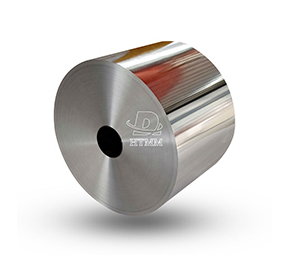
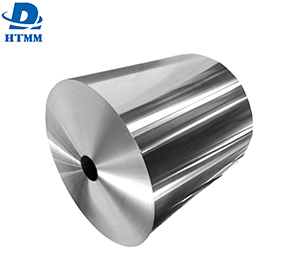
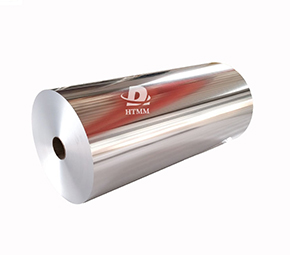
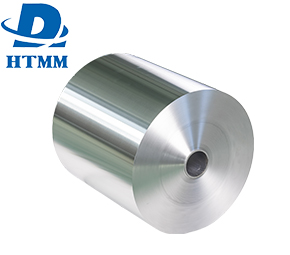
.jpg) On the automated food packaging line, beside the pre-prepared meal box stamping equipment, rolls of aluminum foil raw materials directly affect production efficiency and product quality. Practitioners in the food packaging industry, especially procurement decision-makers and production managers, often encounter a core issue: Faced with numerous aluminum foil specifications, how to choose materials that can not only meet the demands of high-intensity production but also ensure absolute food safety? For assured packaging integrity, what strategies reconcile material expenditure with functional efficacy? Which width specification can best adapt to the existing equipment, reduce the downtime for changing rolls and lower the loss of edge materials? How can we ensure that the selected aluminum foil is fully compliant? The answers to these questions often point to Jumbo Rolls of Heavy Duty Food Grade Alu Foil 300 mm Wide and Thickness of 18 microns. This article will explore the unique value of this specification of aluminum foil coil and its core position in the food industry.
On the automated food packaging line, beside the pre-prepared meal box stamping equipment, rolls of aluminum foil raw materials directly affect production efficiency and product quality. Practitioners in the food packaging industry, especially procurement decision-makers and production managers, often encounter a core issue: Faced with numerous aluminum foil specifications, how to choose materials that can not only meet the demands of high-intensity production but also ensure absolute food safety? For assured packaging integrity, what strategies reconcile material expenditure with functional efficacy? Which width specification can best adapt to the existing equipment, reduce the downtime for changing rolls and lower the loss of edge materials? How can we ensure that the selected aluminum foil is fully compliant? The answers to these questions often point to Jumbo Rolls of Heavy Duty Food Grade Alu Foil 300 mm Wide and Thickness of 18 microns. This article will explore the unique value of this specification of aluminum foil coil and its core position in the food industry. Aluminum foil has become a pillar material for food packaging due to its excellent comprehensive performance. It has nearly perfect barrier capacity, effectively isolating oxygen, water vapor, light and microorganisms, providing the best protective barrier for food and significantly extending the shelf life. In industrial-grade applications, the performance requirements for aluminium foil far exceed those in household usage scenarios, giving rise to the concept of Heavy Duty Alu foil. This type of aluminium foil is specially designed for harsh industrial environments, capable of withstanding the tensile force of high-speed packaging lines, the stamping of automatic forming machines, the support of heavy contents, and the vibration and friction during long-distance logistics. The cornerstone for performance exertion must be Food Grade Alu Foil that strictly complies with international regulations on food contact materials.
The physical specifications of aluminum foil are the core determinants of its application performance, with thickness parameters being particularly crucial, profoundly influencing mechanical strength, barrier performance, forming capacity and cost structure. The thickness range of aluminum foil is very wide, from a few microns of ultra-thin foil to over 100 microns of extra-thick foil, serving different fields. Everyday household aluminum foil is mainly used for food refrigeration, freezing wrapping or simple oven heating, with a thickness usually ranging from 10 to 15 microns. It offers basic barrier properties and convenient hand-tear operation, but its mechanical strength is limited and it is difficult to cope with the high-speed traction and complex forming stress of industrial automation equipment. Special foil for lunch boxes or containers requires higher rigidity and support to maintain the shape of the container and protect its contents. The thickness range is generally between 20 and 40 microns. 18 micron aluminium foil is in a golden position with a high balance between performance and cost.
Width specifications are also a core consideration in industrial procurement decisions, directly related to the compatibility of aluminum foil coils with downstream processing equipment, production efficiency, and the comprehensive utilization rate of materials. The production source of aluminium foil is the giant mother Rolls, namely Jumbo Rolls, which are 600 to 2,000 millimeters in width and tens of thousands of meters in length. After coming off the production line at the aluminum foil rolling mill, these huge objects enter the supply chain as basic raw materials. Downstream slitting and rewinding factories or large end users slit the giant mother rolls into the required finished product widths based on equipment requirements and final product specifications. The width specifications of the finished products are diverse, ranging from several tens of millimeters for pharmaceutical foil or label foil to over one meter for construction or industrial use. In the field of food packaging, Alu Foil 300 mm (300 mm wide) is a width specification of great strategic significance and universal applicability. With a 300-millimeter width design, it serves as an efficient bridge connecting the upstream giant master rolls with the diverse narrow-width applications downstream. For slitting factories, 300mm wide original rolls can be flexibly and economically re-slitted into various commonly used narrow specifications such as 150mm, 100mm, and 75mm, and supplied to different end customers such as lunch box factories, chocolate packaging lines, and dairy sealing lines, minimizing the waste at the edges and corners during the slitting process and improving material utilization. For terminal food factories that directly use rolls for automated packaging or container forming, 300-millimeter-wide rolls often perfectly match the design of equipment material racks, providing stable material supply. Compared with 150-millimeter narrow rolls, 300-millimeter wide rolls significantly extend the running time of a single roll, reduce the frequency of shutdown and roll replacement, and improve overall production efficiency. Compared with 600mm or wider rolls, 300mm rolls are more convenient and flexible for handling, loading and unloading, storage and workshop turnover, reducing the difficulty of logistics operations and the requirements for warehouse space. Alu Foil 300mm width rolls, especially products with Heavy Duty Food Grade Alu Foil attributes, have extremely high circulation in the food packaging supply chain and are often regarded as standardized "intermediate size" inventory specifications.
.jpg)
Focus on the complete specification of Jumbo Rolls of Heavy Duty Food Grade Alu Foil 300 mm Wide and Thickness of 18 microns, and its combined value is clearly presented. "Food Grade Alu Foil" is an uncompromising bottom line that ensures compliance with the strictest food safety regulations throughout the process from source to finished product, providing a fundamental guarantee for the safety of packaged food. "Heavy Duty" is clearly positioned for industrial-grade applications with robust and durable features. Its 18-micron thickness offers mechanical strength and toughness far exceeding those of household foil, reliably withstanding the high-speed operation of automated production lines, the pressure from stamping equipment, and the vibration and shock during transportation, reducing the risk of damage and ensuring smooth production. This specification combination of Food Grade Alu Foil giant rolls has application scenarios covering a wide range of fields in the food packaging industry. Food Grade Alu Foil is a core raw material for the manufacturing of pre-prepared lunch boxes and food containers. It is formed by stamping into various shapes of trays, box bodies and LIDS. With a thickness of 18 microns, it provides the necessary stiffness and load-bearing guarantee. It is widely used in the twisting packaging or inner lining of chocolate and candies, endowing the products with good protection and high-end texture. In butter, margarine and cheese slice wrapping or container sealing, 18 microns Heavy Duty Alu foil withstands the pressure of cold cutting equipment and maintains a good seal. In the pharmaceutical and health care products industry, it is often used as the back sealing material for blister packaging. A width of 300 millimeters is suitable for high-speed production lines. Strength, flexibility and barrier properties are also applicable to industrial gaskets or protective layers for precision components.
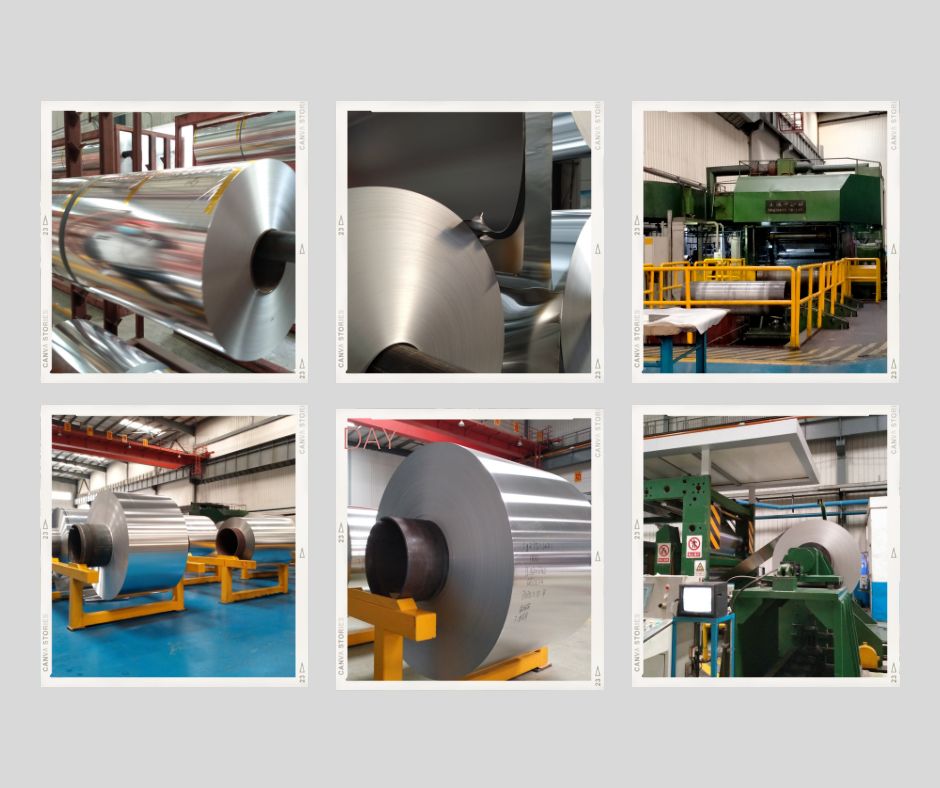
Jumbo Rolls of Heavy Duty Food Grade Alu Foil 300 mm Wide and Thickness of 18 microns specification With an outstanding balance of food safety compliance, industrial strength performance, processing adaptability and overall economic benefits, it has firmly established its position as a basic material in the food packaging industry. It is the safe and reliable Food Grade Alu Foil, and also the tough and durable Heavy Duty Alu foil. The 18-micron thickness precisely meets the core requirements of rigidity and barrier for numerous food packaging applications, while the 300-millimeter width optimizes supply chain efficiency and downstream processing flexibility. Understanding the technical connotation and market value of this specification can help practitioners in the food packaging industry make more forward-looking and cost-effective purchasing decisions, and choose aluminum foil raw materials that truly enhance production efficiency, ensure product safety, and strengthen market competitiveness. In the process of the global food industry's continuous pursuit of higher efficiency and stricter safety standards, this specification of 18 micron aluminium foil giant roll material, with its reliability and universality, continues to serve as an indispensable industrial cornerstone, supporting every link from the production workshop to the consumer's dining table.