Many people automatically believe that their production technique is the source of the issue, but the raw materials may be the true culprit. Today, I want to talk about something that is sometimes forgotten: reliable raw material quality for aluminum foil is not ensured by fulfilling thickness tolerances. Thickness is only the "entry-level threshold" for aluminum foil quality; the important nuances beyond the tolerances are what actually define collaboration costs and product reputation.
Let's begin with the thickness tolerance, which is everyone's top priority. The industry has precise thickness tolerance requirements for aluminum foil used in construction, packaging, and battery applications in the new energy sector. The EN 546 standard, for instance, establishes precise specifications for aluminum foil in various thickness ranges, permitting a tolerance of ±8% for foil as thin as 0.02mm and limiting it to about ±4% for thicker foil.
A product is deemed "compliant" if the supplier's test report indicates that the thickness falls within this range. But homogeneity is not the same as compliance. Even if they adhere to general thickness requirements, certain aluminum foils may exhibit notable thickness variations in specific regions. For instance, the difference between the highest and minimum thickness within a 100 × 100 mm area could be more than 10% of the average thickness. These raw materials are vulnerable to issues in later processing.
Consider aluminum foil used in lithium batteries. Uneven thickness will arise during successive coating procedures if the lateral thickness fluctuation is greater than ±0.5 micrometers. This could result in major risks such internal short circuits in the battery.Any excessively thin sections of aluminum foil used for food packaging would directly impact barrier performance, reducing the item's shelf life and raising post-purchase dangers.
The purity and metallurgical quality of the raw materials used to make aluminum foil are important determinants of quality stability in addition to thickness uniformity. When making purchases, many business owners ignore aluminum content and impurity control in favor of thickness.
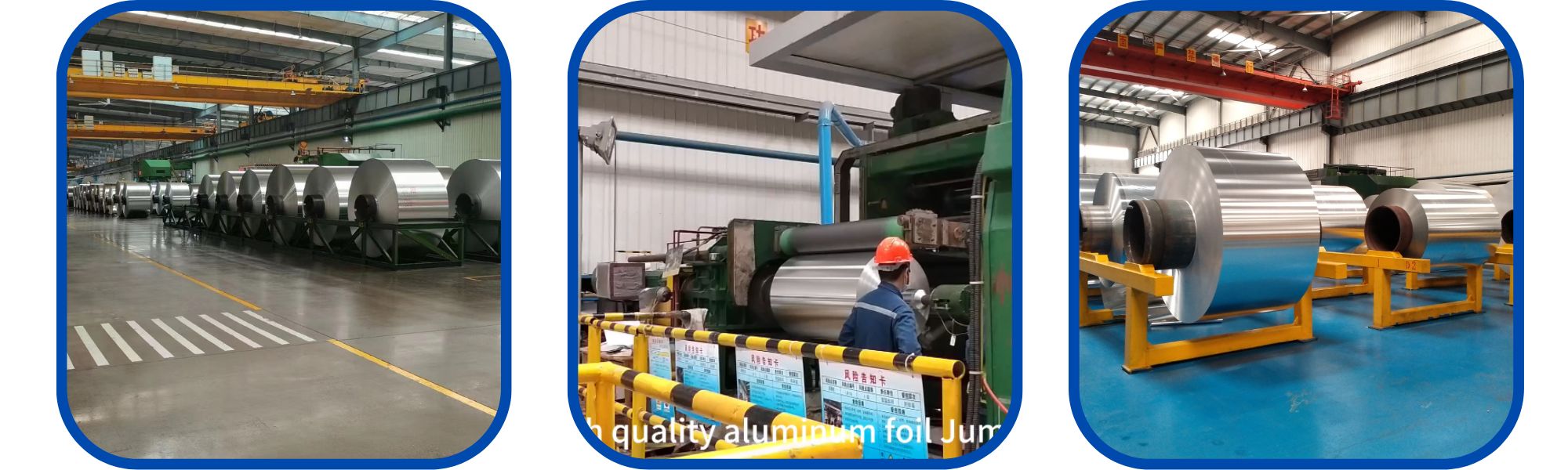
Pharmaceutical-grade PTP aluminum foil needs a purity of 99.9% or higher to provide strong corrosion resistance and processing performance, whereas high-quality aluminum foil raw materials normally need an aluminum content of 99.35% or higher. In addition to lowering the aluminum foil's mechanical strength, excessive impurities in the raw materials might result in surface flaws during processing, which can have an impact on the final product's functionality and appearance.
More importantly, metallurgical quality is crucial. The ultimate quality of aluminum foil blanks is greatly impacted by the slag and gas level in the melt.To prevent internal flaws like gas channels and slag inclusions, reliable providers tightly regulate the hydrogen level in the melt to less than 0.12 mL/100g of aluminum. Surface thickness measures have a much smaller effect on production stability than these invisible interior problems.
The form and surface quality of the aluminum foil is another aspect that is frequently missed. Aluminum foil that satisfies thickness specifications may have surface flaws like scratches and oil stains or shape problems like loose corners and a tight center.
Aluminum foil with poor shape is more likely to be misaligned during rolling and slitting, which raises the scrap rate. The adhesion of succeeding coatings is impacted by excessive leftover rolling oil on the surface. For instance, rolling oil on battery aluminum foil that is more than 5 mg/m² lowers the adhesion of the positive electrode active material, which impacts battery performance. These specifics directly affect your production efficiency and product qualification rate, yet they are outside the purview of the "thickness tolerance" assessment.
Some business owners may now wonder, "How do I judge this during procurement?" I'm not able to send every batch for expert testing, am I? In fact, you may steer clear of most errors by understanding three key points.
First, ask the supplier for thickness uniformity data in addition to reviewing the thickness test report. To ensure that the deviation in any local location is within a tolerable range, consider the range of thickness changes in both horizontal and vertical directions. You can also ask for the CV value (coefficient of variation) for high-requirement industries like batteries and pharmaceutical packaging, making sure the value is less than 1%.
Second, confirm the raw material qualifications of the supplier. Reputable vendors will give you detailed information about the aluminum foil's alloy composition, purity requirements, and quality control procedures including melt refining and annealing.You can request to see the quality certificate of the raw materials to confirm that all indicators meet your usage requirements, rather than just focusing on the thickness parameter.
Lastly, small-batch trial production is essential. No matter how impressive the supplier's test report is, it is recommended to conduct trial processing with small samples first. Verifying the processing stability and surface adhesion of aluminum foil through actual production is more convincing than any written data. After all, meeting thickness standards is only the foundation; stable compatibility with your production process is what truly constitutes "high-quality raw materials."
When buying raw materials for aluminum foil, businesspeople really choose "stability, peace of mind, and reduced overall costs" over "meeting thickness tolerances." The key to establishing whether your manufacturing is efficient and your product is competitive is information that goes beyond tolerances, such as uniformity, purity, and sheet shape. Thickness compliance is only a basic need.
With any luck, this post will help everyone steer clear of buying hazards and stop being duped by the look of "meeting thickness standards." To reduce risks at the source and increase manufacturing efficiency, focus more on those hidden quality factors when selecting raw materials.Please get in touch with us if you have any more inquiries concerning the acquisition of raw materials for aluminum foil. We are prepared to use our expertise to assist you in choosing better, higher-quality raw materials, which will make your company more stable and worry-free.