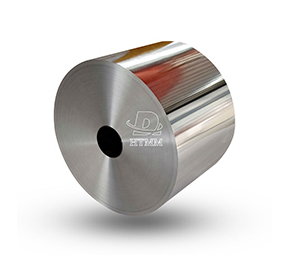
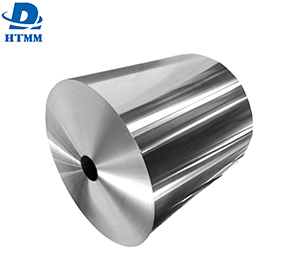
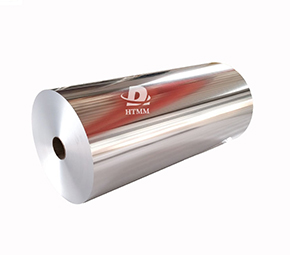
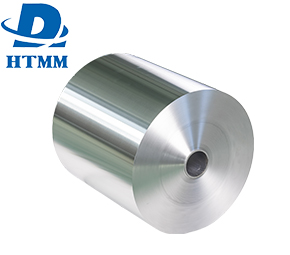
The basic reason why Large Rolls of Aluminum Foil is the main material for food and drug packaging is due to its unique physical and chemical properties. Aluminum foil effectively prevents the intrusion of moisture, oxygen, light and microorganisms, protects the internal product from environmental factors. In the case of drugs, water vapor or a small amount of oxygen penetration can destroy the active drug components, reduce efficiency and even complete it. The excellent blocking of aluminum foil also plays a very important role in food packaging, greatly extending the shelf life of the product and preserving the texture and freshness of food. The thicker the aluminum foil, the better the blocking ability. The thickness of Aluminum Foil for Food Packaging is usually between 0.006 and 0.04 millimeters, and aluminum foil for pharmaceutical packing fluctuates in the range of 20 to 30 micrometers. The specific thickness depends on the sensitivity of the drug to blocking performance.
In the pharmaceutical industry, most large rolls of aluminum foil are processed into cover aluminum foil (Lidding foil) for blister packaging or applied to Alu-Alu (Aluminum-Aluminum), a high-block cold-formed composite film for solid oral formulations such as tablets and capsules. Traditional blister-wrapped aluminum foil must be thermally fused with a rigid PVC/PVDC sheet to create a sealed independent chamber. Among them, the Alu-Alu composite structure (such as OPA/AL/PVC) is widely used in high-value pharmaceutical packaging, which is highly sensitive to moisture and light due to the strong blocking properties of double-sided aluminum composites.
Pharmaceutical aluminum foil must undergo a strict suitability inspection before being put into production, which is directly related to the safety of drug use. In Korea, 'Medicinal aluminum foil medicine' (YBB 00152002) is the main standard. And the purity of the aluminum foil surface must be more than 99.5% and the oxygen transmittance is clearly defined so that it does not exceed 0.1cm³/(m²·24h·0.1MPa). In addition, when entering the international supply chain, it must meet requirements such as DMF filing from the US FDA or the European Union's CE certification. And the production environment must meet GMP clean area standards. In terms of physical performance inspection, the thickness deviation of aluminum foil should be strictly controlled within ±8% and if it is too thin, a pinhole will occur, which will reduce the blocking performance. And if it is too thick, the material cost will increase. In addition, the 2025 edition of "Chinese P
Compared to pharmaceutical packaging, aluminum foil for food packaging also faces strict hygiene and safety requirements. Because aluminum foil must come into direct or indirect contact with food, production criteria therefore include several strict indicators such as heavy metal movement, solvent residues, and microbial limits, and generally refer to the national food safety standard GB 4806 series or FDA regulation CFR 21. Common alloy grades of large food grade aluminum foil rolls include 8011, 1235 and 3003, etc. And the melting state is mostly soft aluminum foil in the "O" state, which facilitates printing, lamination and cutting processes in subsequent processes.
In the case of specific applications, large roll aluminum foil is widely used in soft packaging or container lid film for chocolate, dairy products, bakery and various snacks. With the increasing demand for convenience foods and healthy foods that are low in fat and low in the food consumption market, double-zero aluminum foil packaging can maintain good taste and quality without adding additional preservatives, which fully demonstrates the superiority of aluminum foil as a high block material.
The production of large rolls of aluminum foil is a complex process that combines rolling technology and precision metal. Typically, aluminum sheets with a thickness of about 6.8 millimeters are rolled several times (e.g., cold rolling up to 2.4 mm. In the fifth stage, then compression in the third stage of the foil) and high-temperature annealing, and finally rolled into high-quality aluminum foil with very little thickness and a clean surface. Some industry leaders have succeeded in rolling large double-size aluminum foil with a thickness of 6.3 microns (0.0063 millimeters) and a roll diameter of more than 2 meters with a single roll weight of more than 17 tons. This not only greatly reduces production process waste, but also greatly improves productivity and finished product production.
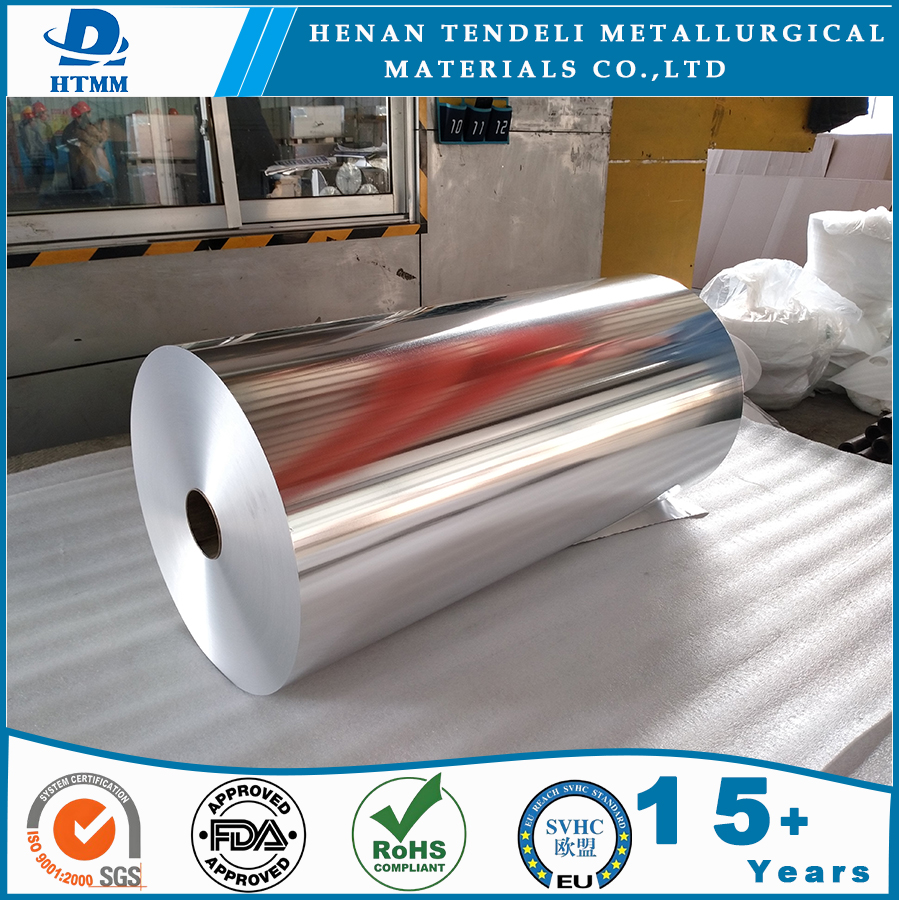
From large rolls to the final application, the cutter is an important bridge between production and demand. Aluminum foil is usually in the form of large rolls from 1 to 2 meters wide and thousands of meters after rolling and end customer requirements are very different. For example, pharmaceutical aluminum foil must precisely correspond to the width of the baler machine. The error must be controlled within 0.1 mm and the cutting edge must be smooth and rough. Otherwise, the sealing may be done incorrectly. Strictly; On the other hand, aluminum foil food packaging should be divided into household rolls of 10 to 50 centimeters or industrial rolls of a certain size. The combination of high-precision cutting equipment, automatic calibration system and tension stability and tension control can increase the use of materials from the traditional 85% to more than 92%, greatly improving production costs.
It is worth noting that at the time when environmental protection and sustainable development became mainstream, the advantages of aluminum foil materials cannot be overlooked either. Aluminum is a metal that can be recycled indefinitely. And the energy used for recovery and regeneration is only a part of the energy required for the production of raw aluminum. And will not lose its own quality even in the repeated recovery process. These characteristics make large roll aluminum foil in a great advantage in the circular economy. In particular, it is in line with strict standards for packaging, carbon emissions and waste management in today's international markets. Aluminum manufacturers in each country are constantly promoting the convergence model of the "green electricity + aluminum" industry and are reducing the carbon footprint of the entire industrial chain using clean energy such as solar and wind power.
Aluminum foil jumbo roll is an important intermediate product that links the processing of raw materials and packaging for end consumers. And has an irreplaceable role in two important precision sectors, namely medicine and food. Not only the highest level of physical blocking performance is required to meet the absolute safety of pharmaceutical and food preservation requirements, but also the highest precision rolling technology, cutting process and strict compliance management system in the production process. As the demand for high-quality protective packaging materials around the world continues to increase, and the concept of environmental protection is deeply rooted in people's minds. The opportunity to use large roll aluminum foil will expand further. And the value of product quality assurance Reduce waste from resources and promote a green circular economy will be more and more prominent.III. China's production process and technical advantages of food-grade aluminum foil rolls
The production of food-grade aluminum foil rolls is a precise and complex process that involves many key connections, all of which have a direct impact on the quality and safety of the final product.
Melting and casting are the starting points of production. High-purity electrolytic aluminum bars are used, magnesium, silicon and other trace elements are added according to specific alloy conditions such as 8011 and 1235 and refined in the melting furnace at high temperature to remove gas and inclusions, then the aluminum liquid is poured directly and rolled into 6 to 8 mm thick mold rolls by a continuous casting and rolling machine. This compound controls the uniformity of the composition of the alloy and the degree of refinement of the grain and lays the foundation for subsequent lamination.
The cold rolling and the rolling of aluminum foil are the basic processes. After several cold rolling, the rolling coil is gradually reduced to an intermediate thickness of about 0.5 mm and then transferred to the leaf mill for fine rolling. Food-safe aluminum foil usually has to be rolled according to an extremely fine specification of 0.006 mm to 0.2 mm, which places extremely high demands on the running accuracy and control of the plate shape. Modern high-speed leaf mills are equipped with an automatic thickness control system (AGC) and a plate control system (AFC) to ensure that thickness tolerance is controlled between ±3% and 5%. During the rolling process, a special running oil must be used for lubrication and cooling. The quality of the running oil and the filter system has a direct effect on the surface cleanliness of the aluminum foil.
Cutting and glosing give the aluminum foil the ultimate performance. The wide rolled aluminum foil is cut to the required width (normally 10 mm to 1700 mm) by longitudinal shearing and then glow. The anniling process is heated to 200℃~400℃ in a protective atmosphere and kept warm for several hours. It aims to eliminate the hardening of the treatment and adjust the mechanical properties. At the same time, it removes the remaining rolling oil on the surface by volatilization at high temperature to ensure that the surface of the aluminum foil achieves food-safe cleanliness (the residual oil is usually less than 5 mg/m²). The precise control of the curve of the annaling process is the key to ensuring the consistency of the elongation and the tensile strength of the aluminum foil.
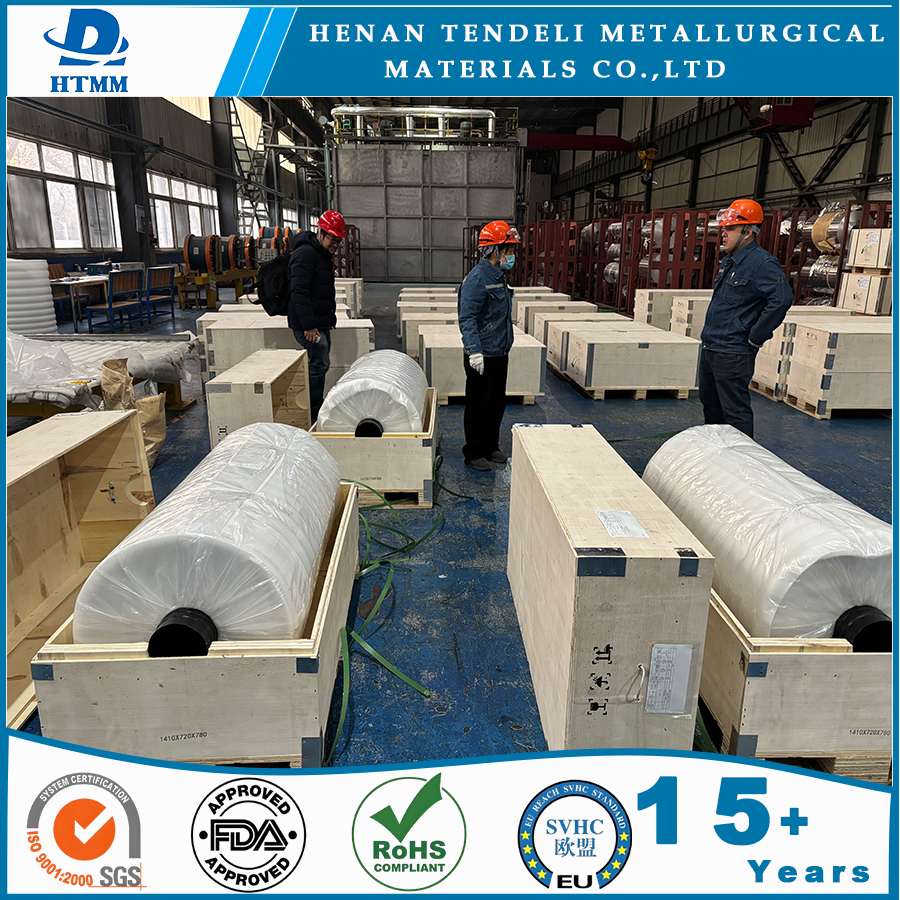
Surface treatment and quality testing are the last steps before leaving the factory. Depending on the customer's needs, aluminum foil can be thoroughly treated such as embossing, printing, punching, coating, etc. or composite with paper and plastic film to produce composite packaging materials. With regard to quality testing, food-grade aluminum foil must also pass the needle hole inspection (using the pinhole detector to count the number of needle holes per unit area required, which ≤50/m²), the surface seam stress test (to ensure the adhesion of ink or adhesive) and the simulation test of heavy metal migration (according to method GB 4806.9). Many manufacturers have developed CNAS-certified laboratories and introduced online verification systems and X-ray thickness gauges to ensure quality traceability throughout the process.
In terms of technological innovations, China's aluminum foil industry has made remarkable progress in the areas of green manufacturing, such as: Ultra-thin (which can produce 0.0045mm double-zero double layer in recent years), high-barrier coating technology, solvent-free composite technology, and rolling oil recycling. These technical capabilities enable the China-made food-grade aluminum foil rolls to reach the international advanced level of physical properties, health and safety, and environmental protection indicators, and can meet the differentiated requirements of various global markets (such as the European Union, the US FDA, Japan, etc.).
Product characteristics and areas of application
Chinese manufacturers of food-grade aluminum foil rolls usually use high-quality alloys such as 8011 and 1235, which have the following main advantages:
Excellent barrier performance: effective isolation of air, moisture and light and prevents oxidation, moisture and deterioration of food
Hygiene and safety: Strictly follow the standard GB 4806.9 to ensure safe contact with food
Strong personalization: The thickness can be flexibly adjusted from 0.006 mm to 0.5 mm, and the width is 10 mm to 1700 mm
Various processing methods: take over a variety of processing processes such as factory surface, primer, composite material, embossing, printing, punching, etc.
The products are widely used in food packaging paper, pharmaceutical packaging foil, food box material, container aluminum foil, household aluminum foil, grill aluminum foil, milk cap material, bottle cap material and other areas.